Major Tom: 4 Months In. When the Experiment stabilizes...
Four months in, and something changed.
Not in a dramatic way, thankfully. Nothing broke, nothing failed. It just stopped being something I had to think about. I had one software update, and have been finding Easter eggs in the Grok interface that makes the daily drive interesting.
Speaking of tech, I was a big fan of the free Full Self Driving (supervised) trial that came with the car. My 2022 is what’s known as “HW3,” while newer models have the updated HW4 system with additional cameras.
During this stretch, I spent some time in Las Vegas for work and made a point to see where this technology is heading. I took a ride in a Zoox robotaxi, its the Amazon-backed, fully autonomous, LIDAR/ camera-driven and did about a 20-mile round trip, including highway speeds. It was impressive. There’s a video link under the photo below.
I also went through the Boring Company’s Tesla Loop, which is essentially a Tesla-powered underground transport system. Ironically, those cars still had drivers.
It’s clear that self driving technology is already here in different forms. The question now is how and when it all comes together. We have a front row seat to a new tech arms race.
Month 4: The Month Nothing Happened
How’s that for a boring honest headline? Since the last update, Major Tom has done exactly what a normal vehicle is supposed to do.
One software update. No warning lights. No service visits. No surprises. Just miles. Cold A/C. Warm heat. Heated seats. Music on demand.
Over the past month:
1,254 miles added
346 kWh used
About $34 in electricity
Efficiency held steady around 276 Wh per mile, basically unchanged from where it has been since day one.
No drop. No spike. No drama.
I’m still recovering from PTSD from rebuilding the engine/ transmission in my previous Chevy Tahoe, so I’m going to bask in the fact that I have a comfortable reliable car that is 8-10x better on “energy use” and really comfortable to drive. For the first time, that stopped feeling boring and started feeling important.
Mileage Pace Check
At this point:
5,684 miles in about four months Based on a 15,000 mile per year lease, I should be sitting around 5,000 miles.
Instead I’m 684 miles over pace. At $0.25 per mile, that is already about $171 in potential overage.
Not a problem yet, but it is the first number in this experiment that actually matters if it keeps trending the wrong direction.
Efficiency has been stable. Cost has been predictable. Mileage might be the thing that sneaks up on me.
The Part I Wasn’t Thinking About- there’s always a ‘BUT"
Before I signed the lease, I asked a very specific question.
I wanted to understand how the warranty worked on a used Tesla lease. Not the marketing version. The real version.
Specifically, whether I would be covered for the duration of the lease. I got a very direct answer from my rep..
“Yeah, the extended service agreement covers the lease term and contracted mileage.”
That mattered at the time. It made this whole thing feel simple.
Drive the car. Track the numbers. See what happens.
BUT- Reality Has a Different Timeline
After digging into the actual structure, the timeline looks different.
The car went into service on June 6, 2022. That starts the factory warranty clock: four years or 50,000 miles.
That puts factory coverage ending on June 6, 2026. After that, Tesla provides a used vehicle limited warranty: twelve months or 10,000 miles, whichever comes first. Not the full lease. Not even close.
At my current pace, that additional 10,000 miles works out to about seven months, pushing effective coverage into early 2027.
My lease does not end until November 2027.
That leaves a real stretch of time where this car “might” be out of warranty while still under lease.
Mileage is not the only thing that can sneak up on me.
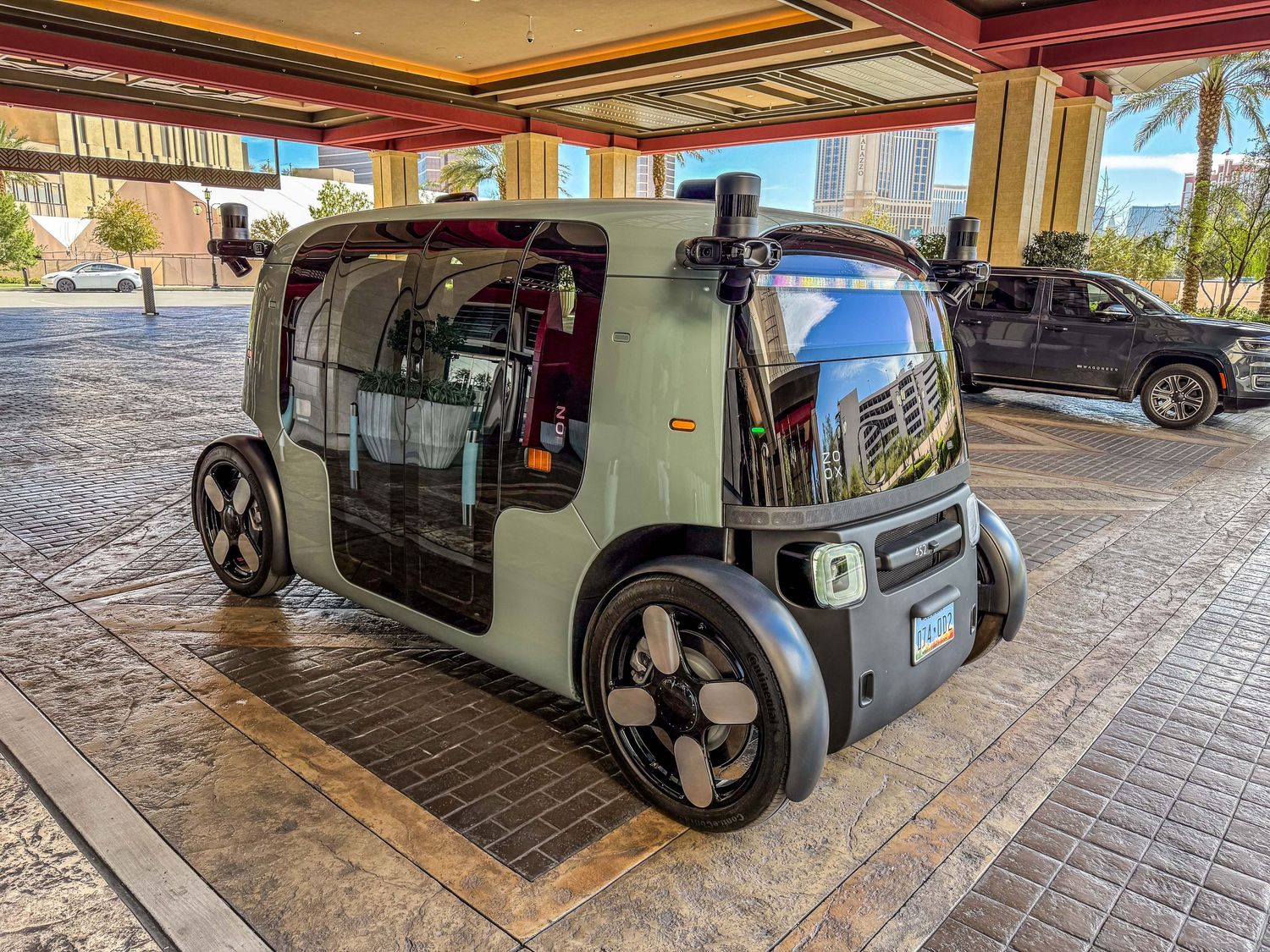
The Amazon backed “Zoox” Robotaxis are taking live passengers around Las Vegas as we speak. The self driving technology exists today.
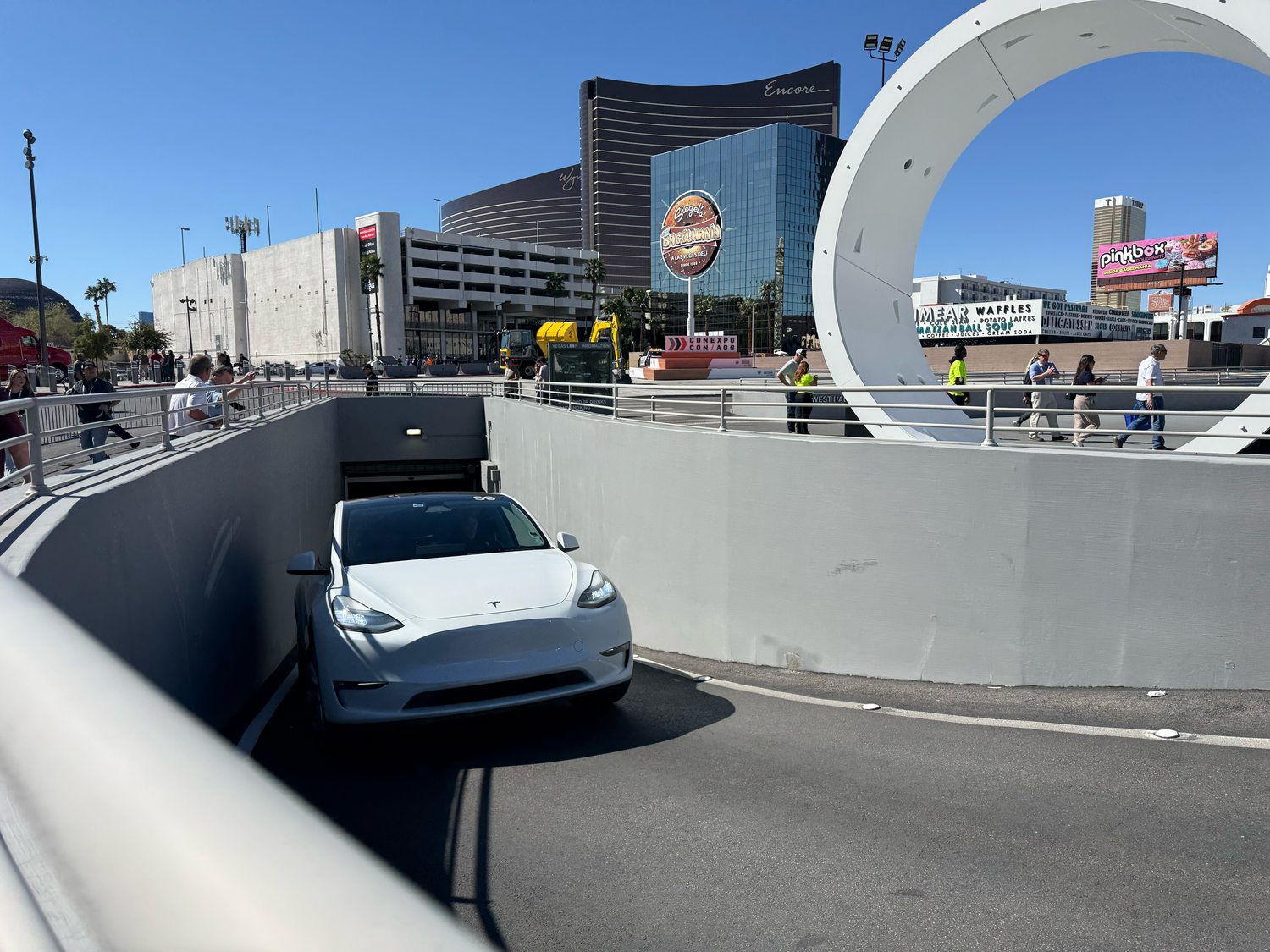
The Boring company’s Tesla Loop has a tunnel network under the streets of Las Vegas delivering passengers
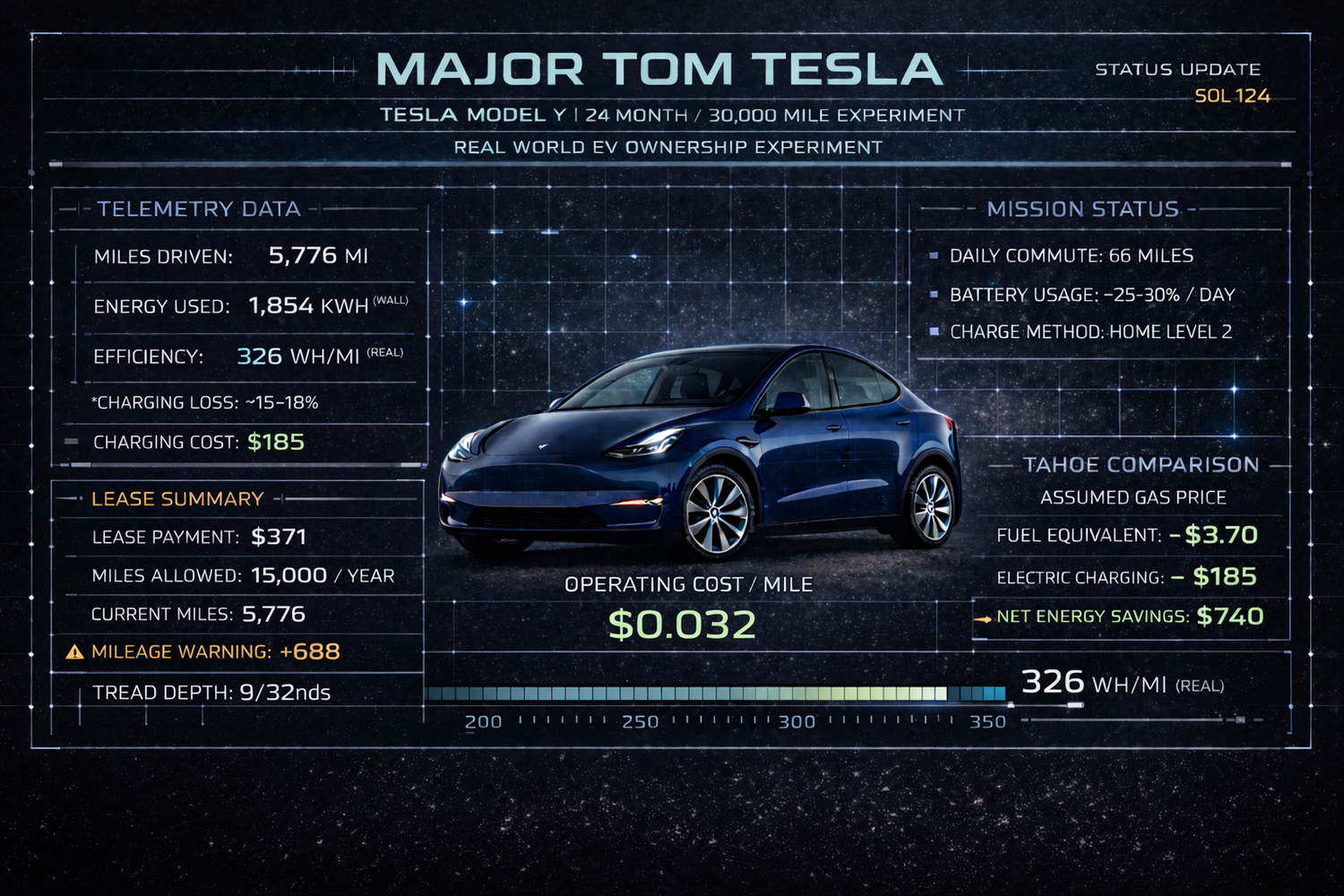
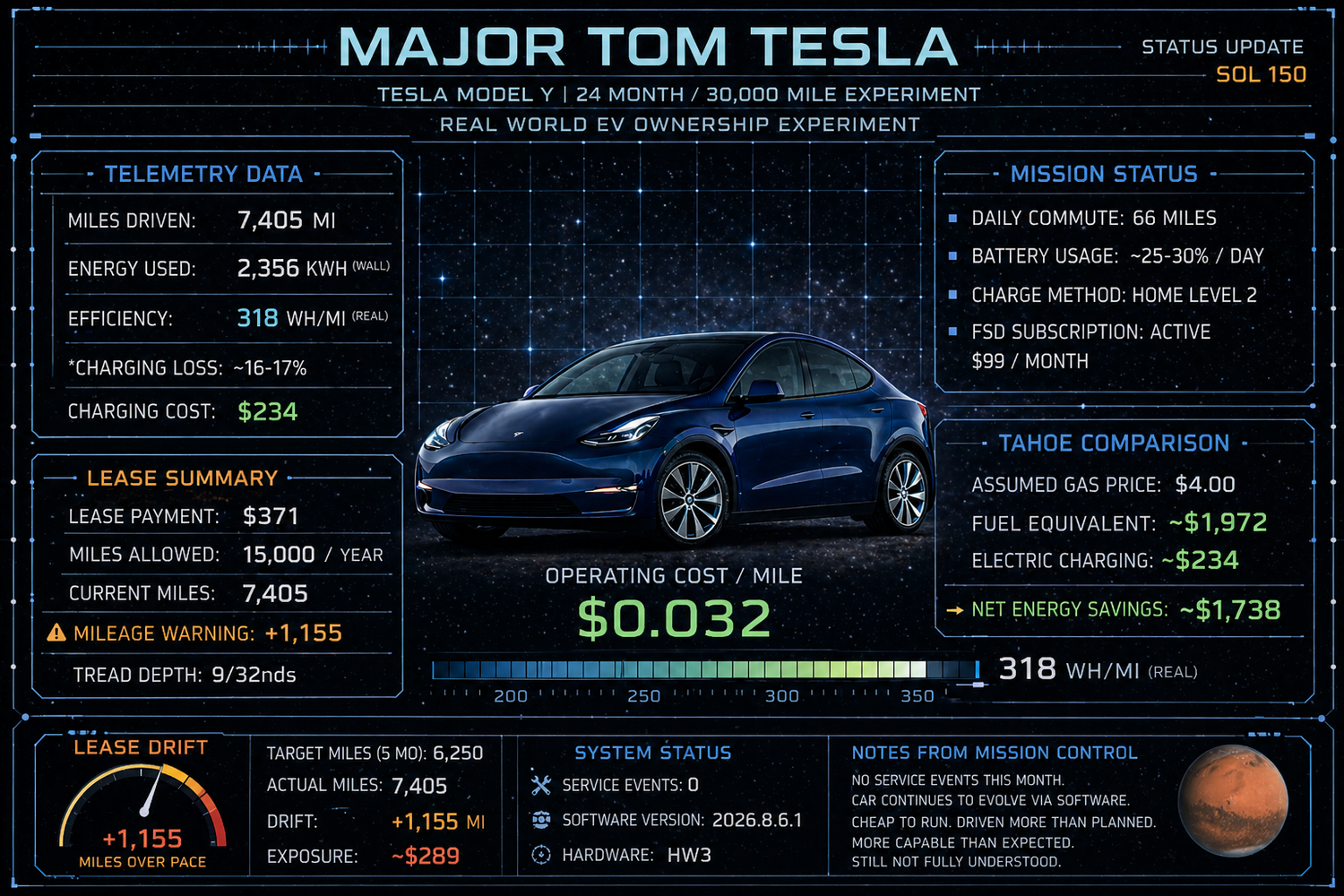
The “Martian” inspired four month status update continuing to show the efficiency of Major Tom and the potential concerns ahead
This is becoming refreshingly normal
Early on, everything about this car felt like something I had to think about. Charging. Range. Planning.
Now I just get in and drive it. No mental math. No second guessing. No range anxiety.
At some point this month, it stopped feeling like an EV experiment and started feeling like a normal car.
I did not notice when it happened.
That is probably the point.
The Household Test
One thing I did not expect (and I’m having a lot of fun with) is how quickly this became the preferred vehicle in the house.
On day one, my wife was not sold on the idea. The only upside she saw was fuel savings. I’m not going to use the word hostille.
By day three, that started to soften. Now at month four, she is asking to take the Tesla more often. I wasn’t expecting this angle of the story to develop, but its really interesting.
There are a lot of real world reasons (safety) that this is a solid choice for a family car, and I’ll build on those as we progress.
That is not about specs. Not about cost per mile.
This is the car she would rather be in, she has a fairly new Honda Passport as her daily driver curently. There’s nothing wrong with it, but she’s becoming a Tesla convert.
That tells me more than any data point. But we love Data Points.
Quarter 1 by the Numbers
Since pickup:
5,684 miles driven
1,566 kWh used (vehicle)
1,854 kWh pulled from the wall
$185 total charging cost
That works out to:
~275 Wh per mile (displayed)
~326 Wh per mile (actual)
There is roughly a 15–18% gap between what the car reports and what I actually paid for. That difference is charging loss, and it never shows up on the display.
Cost per mile comes out to about 3.2 cents.
For comparison, my Tahoe at ~15 MPG and ~$3.70/gallon would be running about 24–25 cents per mile.
My electricity cost has not changed. Gas has, a lot..
My unofficial “buddy’s Tesla" comparison.
Checking Back In on the Comparison
I mentioned Neil’s 2026 Model Y (LR AWD) back in Part Three as a reference point.
At similar mileage, his newer car is running about 5% more efficient than mine.
Neil is at 5,656 miles and 1,478 kWh, or roughly 261 Wh per mile.
His driving is mostly city. Mine is mostly highway.
What makes that interesting is that he is on 21-inch wheels, which should hurt efficiency compared to my 19s.
So Tesla is making their cars more efficient, constantly improving things, but not in a dramatic way.
In real use, it is not something you would notice without tracking it this closely.
If there is a gap between model years, it is real, but small enough that how you drive probably matters more than what you drive.
Full Self Driving: The Free Trial That Got Cut Short
Tesla gave me a free month of Full Self Driving.
I used it a lot at first—not as a gimmick, just to see what it would actually do in normal driving.
The honest take: it is really good. Its not perfect. Not magic. But far more capable than I expected, especially on this hardware.
Then it went away earlier than expected.. A camera issue at the end of my first month took it offline, and by the time that was sorted out, the trial period was effectively over.
Back to Reality: Living With Autopilot
Since then, I have been using standard Autopilot.
And the difference is obvious.
Autopilot works. It is fine. But it feels like basic smart cruise control.
It is useful for small things—grabbing a drink, cleaning my sunglasses, adjusting something, maybe. The constant steering reminders get old quickly. It does the job. It just does not feel like the same system.
The gap looks like this:
Full Self Driving feels like a glimpse of where things are going
Autopilot feels like where things are right now
The Vredestein Long Term testing Update
Last week, I found myself in the driveway early in the morning with a durometer. What’s a durometer? Its a gauge that measures the hardness of rubber. Its $20 on Amazon. My thought was to document the hardness of the rubber as the tires age (long term), and to see if tires noticeably set softer on the drive to work/ commute.
So I measured it.
56 Shore A cold
56.5 after a 33-mile drive
That is basically a rounding error.
I’ve been checking my tires every Monday since they were installed, and nothing has changed that I can see on my tread depth gauge. Tread depth is still 9/32, the same as when installed. I actually bought a digital gauge which I assumed would be more accurate and easier to track.
At about 2,500 miles on the Vredestein Hypertrac All Season tires, I’m past first impressions.
What stands out isn’t the numbers, it’s the lack of drama. They’re quiet and confidence inspiring.
We’ve had plenty of rain lately. Heavy rain. Standing water. The kind of conditions where you expect to notice something.
I didn’t. No slipping. No surprises. No moments where I felt like I needed to back out of it. Just normal driving in conditions that usually aren’t really great.
If there’s a better compliment than that, I don’t know what it is.
What Changed in Month 4?
Nothing about the car really changed.
I drove it. I enjoyed it. And it quietly became part of the routine.
The first three months were about figuring it out.
Month four is where it stopped being interesting and started being useful.
Where This Goes Next
If the first three months were about understanding the system, and month four proved it’s stable, the next phase is figuring out what actually changes over time. Tire wear. Temperature. Cost trends. Real-world use of Full Self Driving on longer drives. Photo and video work. It’s “just a car”… until it isn’t.
But over the horizon, this becomes uncharted territory.
After June 6, 2026, the factory warranty is gone. The clock starts on the used vehicle warranty—and at my current pace, that clock runs out well before the lease does. So for now, I’m not as concerned about mileage pacing. Between now and June, this is the lowest-risk window I have. If something is going to show up, this is when I want it to happen.
After that, the strategy changes. Because mileage might cost me money.
But the warranty gap?
That’s the part of this experiment that doesn’t show up on a dashboard.
(and yes, I am beginning to leave annoying voicemails with my advisor).
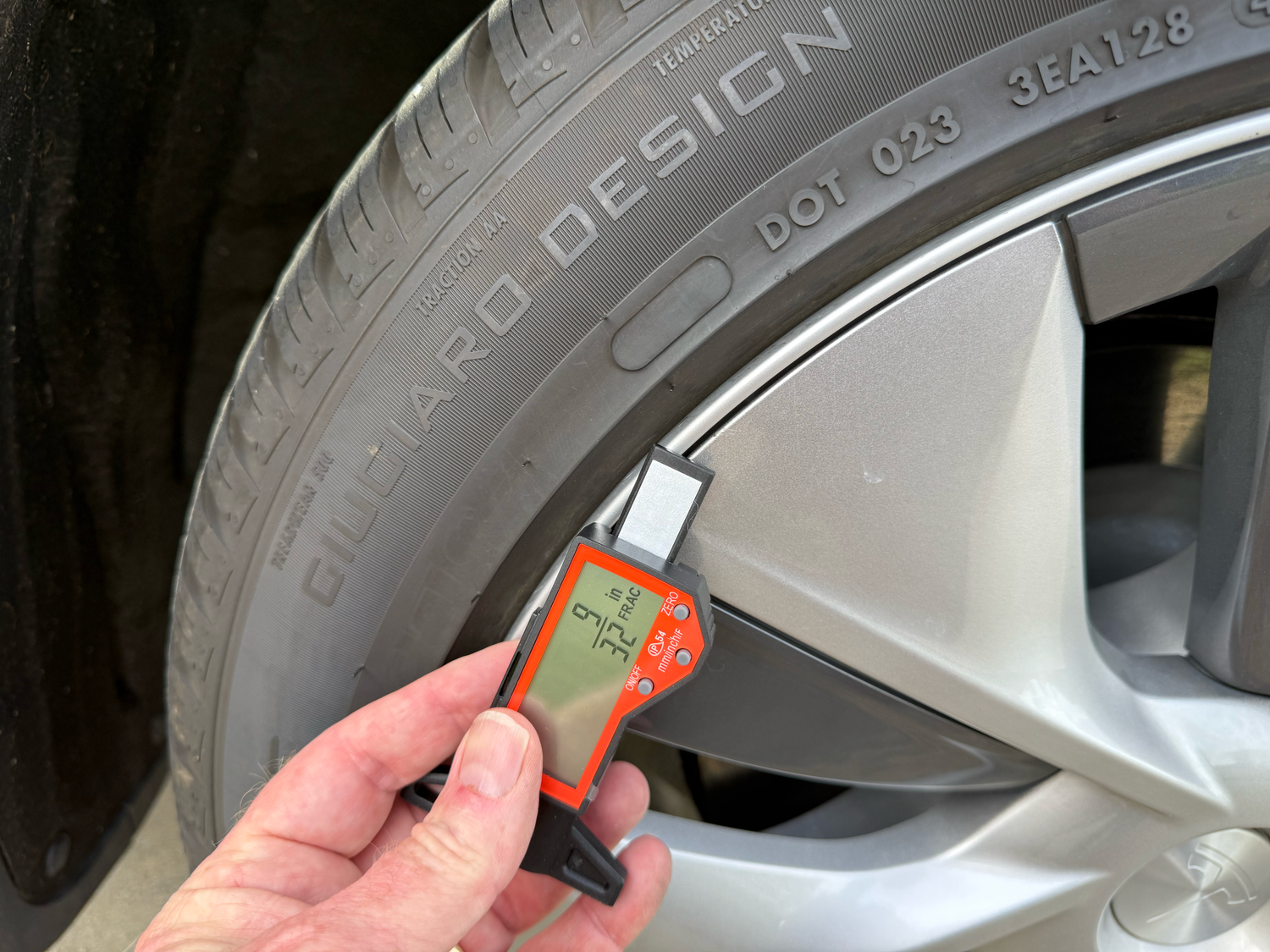
The Vredestein Hypertrac All Seasons haven’t aged in their first three months. I bought a digital gauge to make tracking the tire wear easier