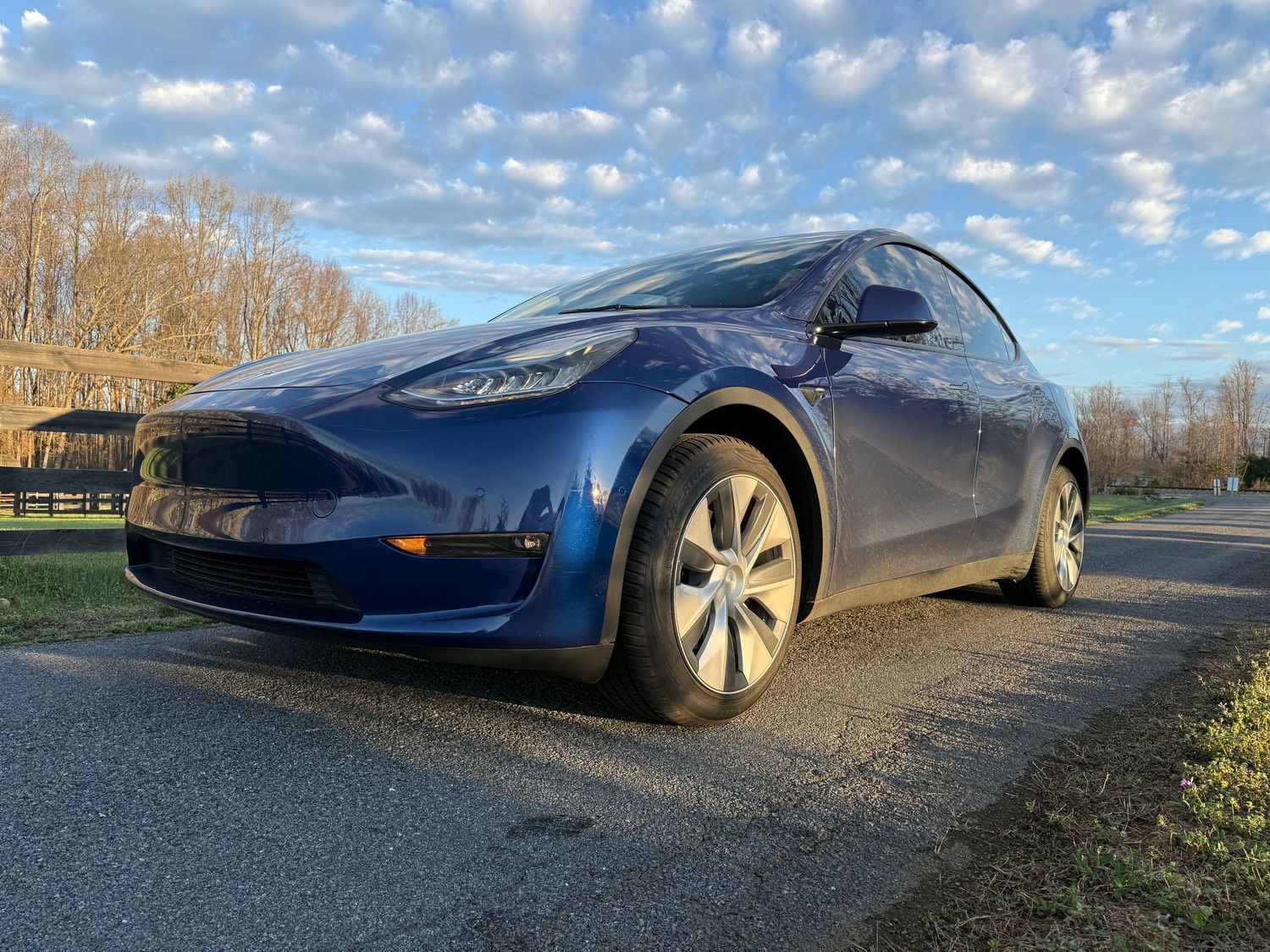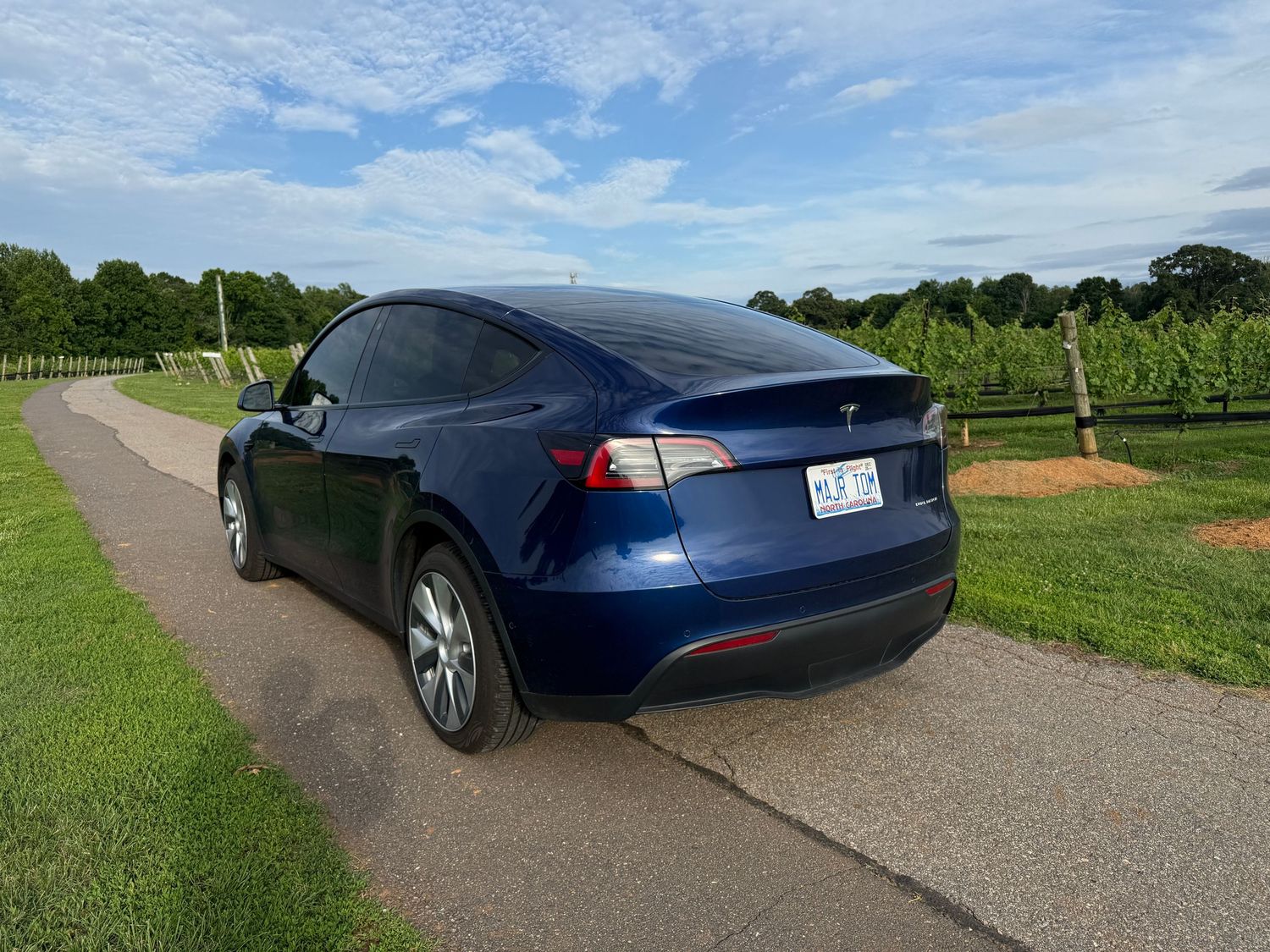
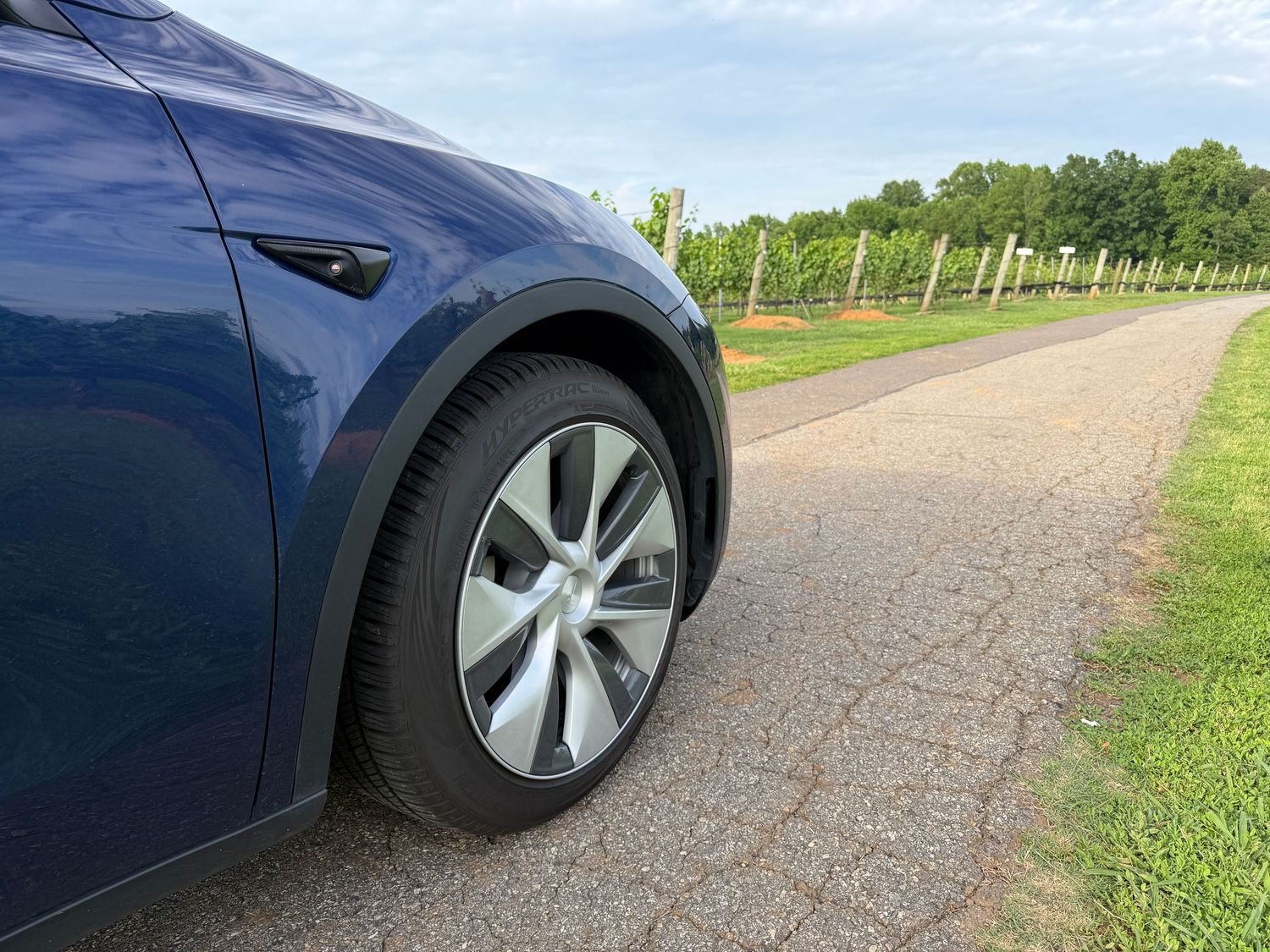
Vredesteins at the Vineyard
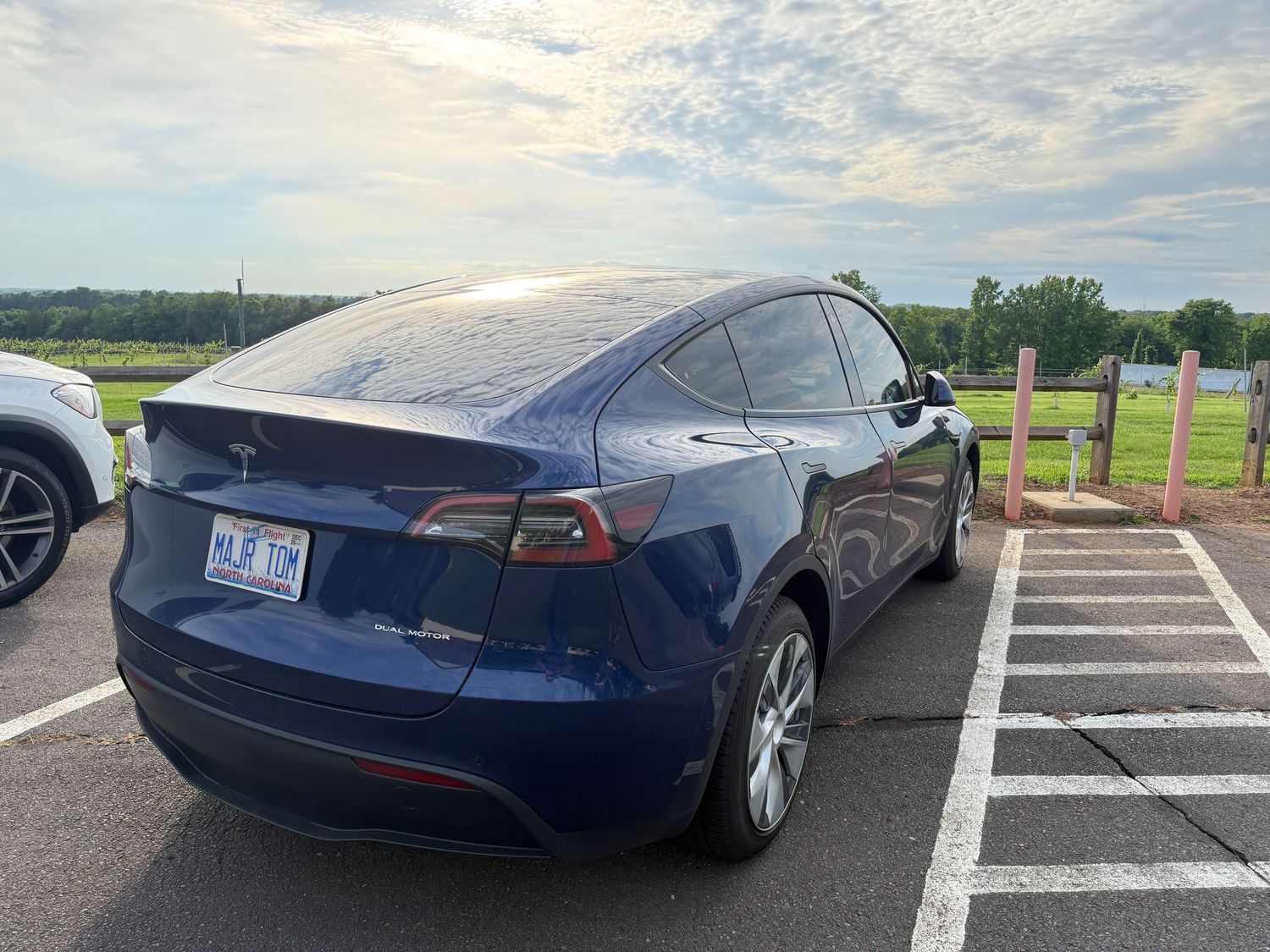
An unexpected “problem” with the Tesla is how we seem to want to take it everywhere.
Major Tom Mission Report: Six Months In
Six months into this used Tesla Model Y lease experiment, Major Tom has officially moved past the “new toy” phase.
At this point, the car is no longer just a curiosity, a rolling tech demo, or something I am trying to understand from the outside. It has become my daily driver, my efficiency experiment, my tire test platform, my content machine, and, occasionally, my excuse to take the long way home when I probably should not.
That last part matters.
Because six months in, the story is not just about how cheap the car is to drive. It is also about how easy it is to drive it too much.
The Six-Month Numbers
The current Tesla trip data shows:
Miles tracked: 8,989 miles
Energy used: 2,430 kWh
Average efficiency: 270.3 Wh/mi
Efficiency equivalent: 3.70 miles per kWh
Tesla app electricity spend since acquisition: $270
Average energy cost: about 3.0 cents per mile
That is the kind of number that still feels a little fake, even after living with the car for six months.
For comparison, at $4.15 per gallon, a 20 MPG gas vehicle would have used about 449.5 gallons of fuel over the same 8,989 miles. That would cost about $1,865.
Major Tom’s electricity spend over the same period: $270.
That puts the fuel savings at roughly $1,595 compared with a 20 MPG vehicle.
That is the good news.
The less-good news is that I am also driving the car enough to create a lease-mileage problem.
The Lease Mileage Reality
This is a 24-month, 30,000-mile lease. That works out to 1,250 miles per month.
At the six-month mark, the car should be around 7,500 miles into its lease allowance.
Instead, Major Tom is at 8,989 miles driven since acquisition.
That puts me about 1,489 miles over pace.
At $0.25 per mile for excess mileage, that represents about $372 in potential lease-end exposure so far.
That is not catastrophic. It is not even close to panic territory. But it is real. The ship is not on fire, but one of the amber lights is definitely blinking.
The interesting part is that the energy savings are still ahead of the mileage penalty. Even after subtracting the current theoretical excess-mileage exposure, Major Tom is still roughly $1,223 ahead compared with a 20 MPG gas vehicle at $4.15 per gallon.
So the economics are still favorable.
But the trend needs a course correction.
Corrective Burn Active
At the five-month checkpoint, Major Tom was about 1,155 miles over lease pace. At six months, that number has increased to about 1,489 miles over pace.
That means month six added roughly 334 miles of additional drift.
Not terrible, but definitely not something to ignore.
The mission-control version is simple:
Mileage Pace: Amber
Corrective Burn: Active
Since I am now 25% through the lease, there is still time to fix the trajectory. With 21,011 miles remaining over the next 18 months, I need to average about 1,167 miles per month from here to finish the lease on target.
That is actually not as ugly as it sounds.
My work commute is about 66 miles per day round trip. If I reduce Major Tom’s commute duty to three days per week and avoid unnecessary weekend joyrides, that commute load drops to about 198 miles per week, or roughly 860 miles per month.
That leaves about 300 miles per month for errands, local driving, and the occasional not-completely-stupid detour.
In other words, three commute days per week plus some discipline should get the mission back on track. My wife certainly won’t mind. She has become quite fond of babysitting Major Tom. We will do a side-by-side efficiency post in her honor soon between “chill” and “sport” modes, since she can’t seem to resist the latter.
The Passport Assist Question
Of course, this creates the obvious question:
If I enjoy driving Major Tom this much, is it worth switching to my wife’s Honda Passport two days per week?
The math says maybe.
A 66-mile commute in Major Tom costs about $1.98 in electricity at roughly 3 cents per mile.
The same commute in the Passport, assuming around 22 MPG and $4.15 per gallon gas, costs about $12.45 in fuel.
On the surface, that makes the Tesla the obvious winner.
But lease mileage changes the equation.
Every 66-mile commute moved away from Major Tom also avoids 66 potential excess lease miles. At $0.25 per mile, that is $16.50 in avoided lease-mileage exposure.
So the real comparison looks like this:
- Tesla electricity avoided: about $1.98
- Lease mileage exposure avoided: $16.50
- Passport gas cost: about $12.45
- Net advantage of using the Passport: about $6 per commute day
That does not mean the Passport is cheaper to operate, because it's not.
It means that if those Tesla miles are likely to become excess lease miles, using the Passport a couple of days per week could still be financially smarter.
Over the remaining 18 months, switching two commute days per week away from Major Tom would keep roughly 10,300 miles off the Tesla. In theory, that could avoid about $2,575 in lease-mileage penalties while adding about $1,940 in Passport fuel costs.
That is a potential net advantage of about $630.
Not life-changing money, but not nothing either. More importantly, it helps keep the lease from becoming a mileage-stress machine.
Range, Efficiency, and Real-World Use
The efficiency side of the experiment continues to be strong.
One recent drive showed:
Distance: 34.2 miles
Energy used: 8.3 kWh
Efficiency: 244.3 Wh/mi
Battery used: 12.5%
Only 0.9% more energy than rated
That kind of drive is important because it shows what normal use can look like when conditions are reasonable.
The car is not magically immune to speed, weather, terrain, or climate control. None of these things stopped mattering just because there is a battery under the floor. But in real use, over real miles, the Model Y is still proving to be brutally efficient.
Nearly 9,000 miles in, the car is averaging 270.3 Wh/mi. That is not a one-trip screenshot or a carefully staged downhill run. That is enough driving to start calling it a trend.
The Neil Comparison
This month also adds another useful wrinkle to the experiment: Neil.
Neil is a friend, former Mack Trucks marketing guy, fellow car nerd, and now another Tesla owner. In other words, exactly the kind of person who can accidentally turn normal transportation into a spreadsheet with tires. That makes his car useful as a comparison point.
Major Tom is my used Tesla Model Y lease with 19-inch wheels, a lower monthly payment, and a mostly highway commute pattern. Neil’s car is a newer 2026 Model Y with 20-inch wheels and more city driving.
That matters.
A lot of people talk about EV efficiency like it is one fixed number, but it is not. Wheel size, tires, speed, commute type, temperature, terrain, charging habits, and driving style all matter. The same basic vehicle can tell a different story depending on how it is used.
Here is where the comparison stands right now:
Major Tom:
Miles tracked: 8,989 miles
Energy used: 2,430 kWh
Average efficiency: 270.3 Wh/mi
Last 100 miles: 246.5 Wh/mi
Since-charge efficiency: 250.9 Wh/mi over 69.0 miles
Wheel size: 19-inch
Driving mix: mostly highway
Electricity spend since acquisition: $270
Neil’s 2026 Model Y:
Miles tracked: 7,512 miles
Energy used: 1,942 kWh
Average efficiency: 258.6 Wh/mi
Last 100 miles: 246.9 Wh/mi
Since-charge efficiency: 243.9 Wh/mi over 81.6 miles
Wheel size: 20-inch
Driving mix: more city driving
On the lifetime/trip average, Neil’s car is currently running about 11.7 Wh/mi better than Major Tom.
That works out to roughly a 4.5% efficiency advantage for Neil.
That is interesting because Neil has the larger 20-inch wheels, which I would normally expect to hurt efficiency compared with Major Tom’s 19-inch setup. But his more city-heavy driving likely helps offset that. EVs tend to do well at lower speeds and with regenerative braking, while my mostly highway commute gives Major Tom fewer chances to claw energy back.
The last-100-mile numbers are almost identical:
Major Tom: 246.5 Wh/mi
Neil: 246.9 Wh/mi
That tells me the cars may be closer in real-world efficiency than the lifetime numbers suggest. The bigger spread probably has more to do with route, speed, commute pattern, and driving mix than one car being dramatically better than the other. The other major difference is the payment. Major Tom is about $300 per month less expensive than Neil’s newer lease. That does not make my car better, but it does change the economics. Neil has the newer-car advantage. Major Tom has the cheaper-lease advantage. That is exactly why this comparison is useful. It is not just “which Tesla is better?”
It is a real-world look at two different versions of the same basic EV ownership experience:
Used lease versus newer lease
19-inch wheels versus 20-inch wheels
Mostly highway driving versus more city driving
Lower payment versus newer vehicle appeal
Similar efficiency, different economics
So far, Major Tom’s six-month data is strong: 8,989 miles tracked, 2,430 kWh used, 270.3 Wh/mi average efficiency, and $270 in electricity spend since acquisition.
Neil’s car gives me a second data point: 7,512 miles, 1,942 kWh, and 258.6 Wh/mi.
One Tesla tells a story.
Two Teslas start to show a pattern.
The early takeaway is simple: EV ownership is not just about the car. It is about the use case. Major Tom’s numbers are shaped by my commute, my charging rate, my tires, my wheel size, and my lease structure. Neil’s numbers are shaped by his own mix.
That comparison should help answer one of the bigger questions behind this whole experiment:
Is the used Tesla lease math good because Major Tom happens to fit my situation, or is this simply what happens when the right EV lands in the right use case?
That is worth tracking.
The Honest Six-Month Verdict:
Six months in, the used Tesla lease experience is still a mixed but mostly positive story.
The car itself has been excellent to live with. The efficiency is real. The energy savings are real. Charging at home, especially with some of May’s charging shifted to a discounted rate around 7 cents per kWh, makes the operating cost almost ridiculous compared with gas.
But the lease mileage is the catch.
The problem is not that the car is expensive to drive.
The problem is that it is too easy to drive.
That may be the most backhanded compliment possible for an EV.
Major Tom is over mileage pace, but the energy savings are still outrunning the penalty. For now.
The next phase of the mission is about discipline.
Three Tesla commute days per week. Fewer weekend joyrides. Strategic use of the Passport when it makes financial sense. Keep tracking electricity spend, efficiency, tire wear, and lease pace.
In mission-control terms:
Efficiency: Green
Energy Cost: Green
Mileage Pace: Amber
Lease Exposure: Amber
Net Economics: Green
Corrective Burn: Active
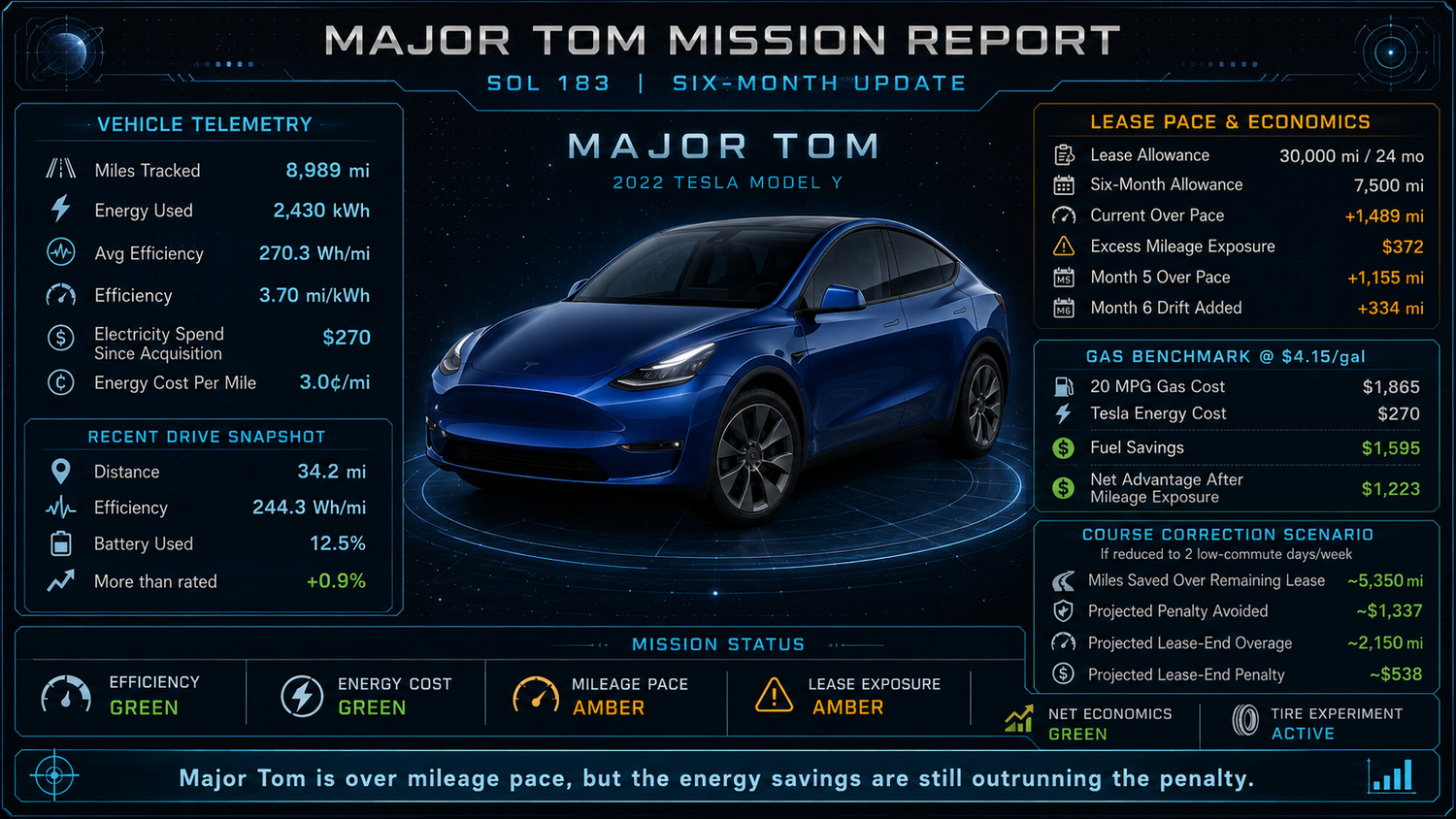
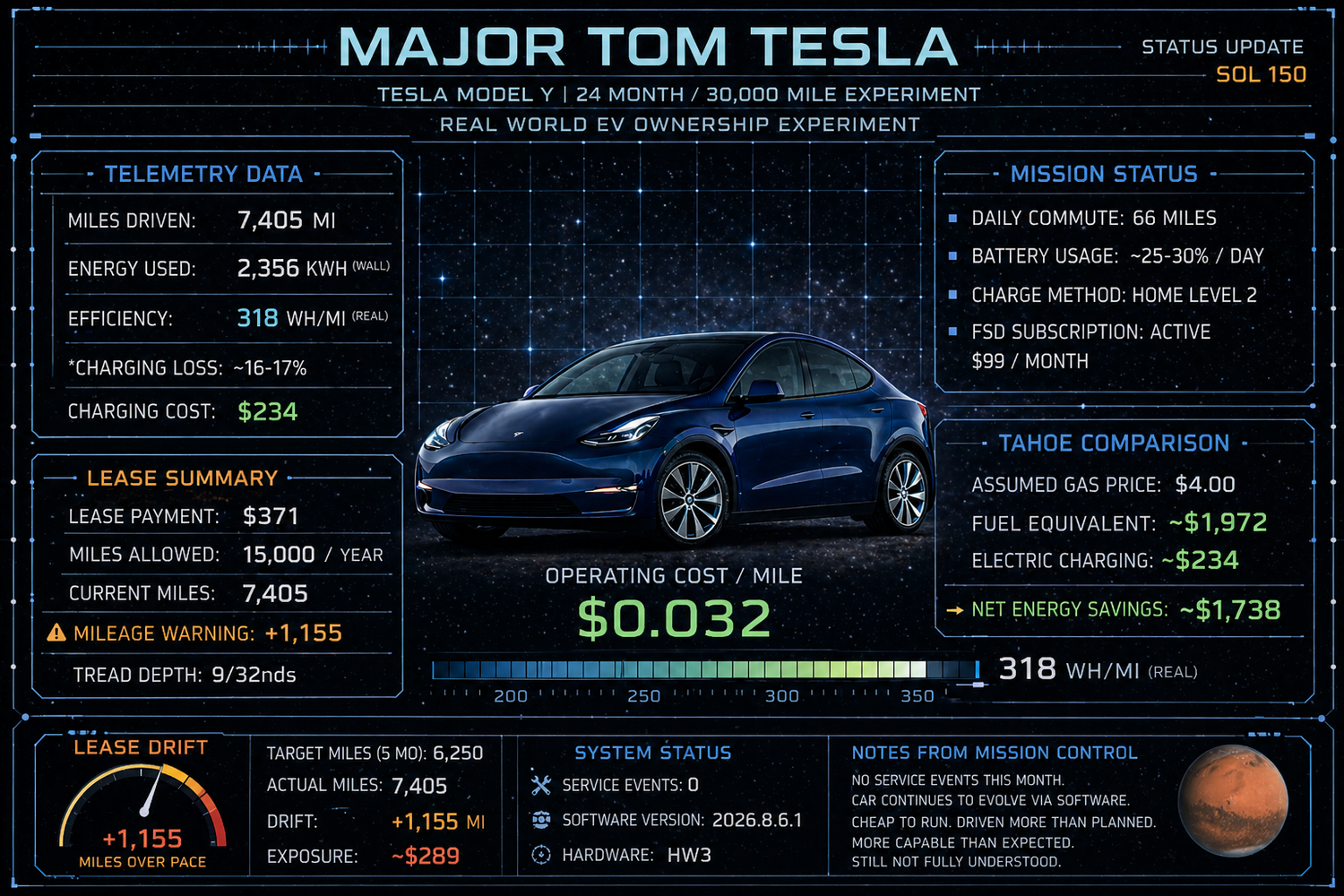
The six month Major Tom graphic says a lot about lease math with a fun car.