Chapter 1- Why a Used Tesla Lease Is Worth Paying Attention To
Originally, I didn’t set out to document a Tesla lease.
In fact, if you’d asked me a year ago whether I’d ever lease a used car sight unseen from an app, I probably would’ve laughed and told you the industry spent decades learning why that wasn’t a great idea.
And yet, here we are.
I follow a lot of car and truck companies, industry news, and ownership stories. Tesla has always been a curiosity for me, but not something I seriously considered. Early on, the cars were out of my budget. Battery replacement costs were a big unknown. I wasn’t thrilled about EV mandates, and I didn’t love the idea of effectively paying someone else’s tax credits on a car I didn’t own. My wife also hated the idea.
Then Tesla quietly rolled out a pre-owned leasing program.
It launched in a handful of states, including North Carolina, with very little fanfare and almost no explanation. There was none of the structure most buyers associate with certified pre-owned vehicles. No spec sheets. No inspection checklist. No test drives. Just a few photos, some lease math, and a button that says “order.”
That alone made it interesting.
I’ve spent a good chunk of my career in the traditional auto business. Toyota, Honda, BMW, MINI. Internet sales, F&I, corporate e-commerce strategy. I’ve watched how certified programs are built, why they exist, and how much effort manufacturers put into protecting resale values and customer confidence. CPO programs aren’t just about used cars. They exist to support new-car sales. Stable residuals make leases affordable. Affordable leases move inventory. The whole system depends on that foundation holding.
Which brings us back to Tesla.
I started seeing early chatter online about pre-owned Tesla leases, and it caught my attention. To be clear, Tesla isn’t calling this a “certified” program. At the moment, it’s barely branded at all. It’s simply a pre-owned lease with an extended warranty attached.
For years, Tesla didn’t really need a certified ecosystem. Demand was strong. Incentives were plentiful. The resale market largely took care of itself. That world is changing. Tax incentives are thinning out. Competition is heavier. Lease math matters again. Residual values matter again. A pre-owned leasing program isn’t a novelty anymore. It’s infrastructure.
On paper, Tesla’s pre-owned lease offering makes sense. You’re paying for less depreciation over a shorter exposure window. Someone else already absorbed the steepest part of the curve. For the right buyer, especially someone who drives a lot and values predictable costs while staying reasonably current on technology, the math can be compelling.
What’s less clear is how well the process itself holds together.
Tesla’s approach flips the traditional model on its head. The cars live in storage facilities, not dealer lots. There’s no walking around the vehicle. No sniff test. No sales manager to ask uncomfortable questions. You commit first, see the car later, and hope your definition of “acceptable condition” aligns closely enough with Tesla’s.
That gap between theory and reality is what prompted this project.
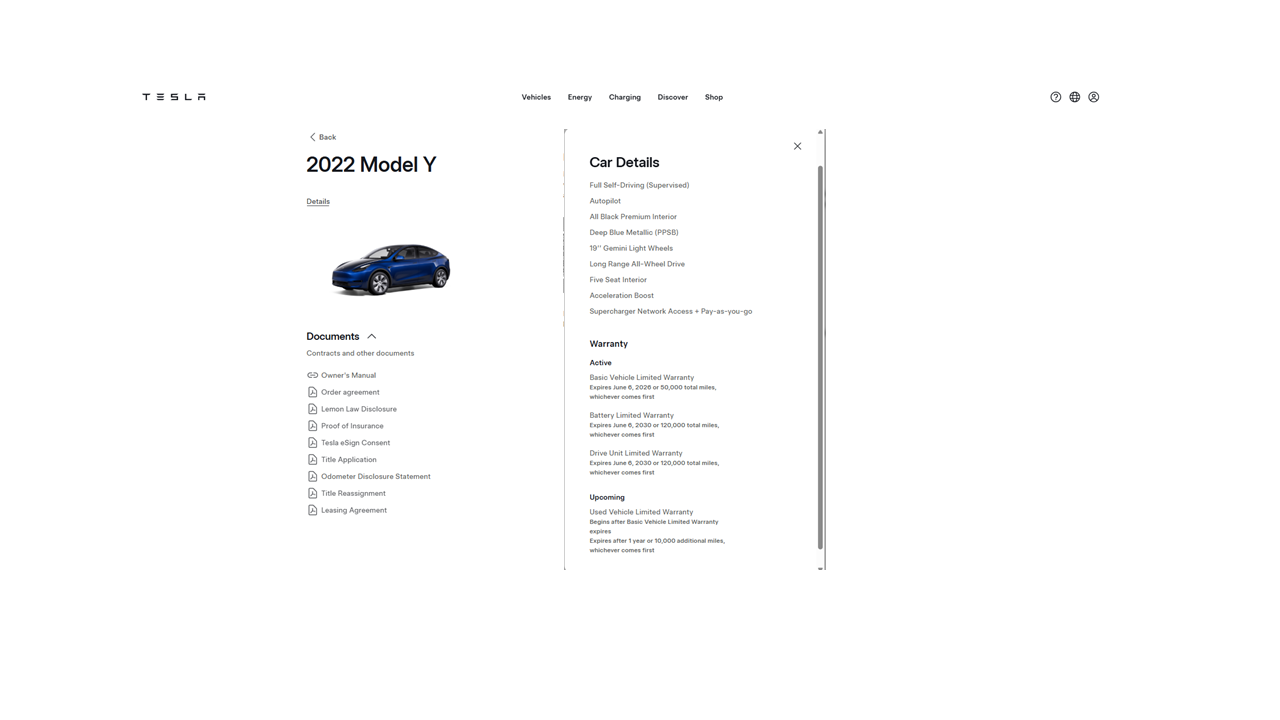
I leased a 2022 Model Y Long Range AWD directly from Tesla under this new program. Not because I wanted to defend it, and not because I wanted to tear it down, but because it felt like a rare opportunity to document something as it’s being built. Over the next 24 months and 30,000 miles, I’ll be tracking real-world costs, charging behavior, tire wear, maintenance, and the everyday realities of living with a leased, four-year-old EV.
This isn’t an influencer project. There’s no referral code. No hype cycle to feed. I do like Tesla’s products, but I’m not interested in pretending the process is better than it is, or worse than it is. Most car buyers don’t live at either extreme. They live in the middle, doing math, asking reasonable questions, and trying not to make expensive mistakes.
If Tesla’s pre-owned lease program is going to matter, it won’t be because of marketing. It’ll be because it works quietly and consistently for people who just want transportation that makes sense.
This series is an attempt to find out whether it does.