Chapter Six – Rubber Meets Lease Reality
One of the quiet anxieties of leasing isn’t the monthly payment. It's the tires. I've seen several BMW/ MINI customers in the past have an uncomfortable and unexpected (expensive) experience at lease turn-in because they didn't read the fine print about tires in their lease contract. It's also a professional sales consultant's job to disclose the hidden "gotchas" in leasing to his customer or he won't have many repeat customers. In Tesla’s case, the tires need to have a minimum of 4/32nds of an inch of tread depth, and they all need to be “matching.” The term isn’t clearly defined in the contract. Normally, “matching” would imply identical brand, model, size, load rating, and speed rating.
When I picked up Major Tom, the tires "technically" met that requirement. The left front (2021 Veteran) had 4/32nds, the right front (also 2021) had 4/32nds, the right rear (2023-formerly on the right front according to service) had 5/32nds, and the brand new left rear was at 7/32nds (replaced just before I took delivery). The right rear had previously been mounted on the right front, coincidentally the corner that was previously involved in an accident. They were technically "matching," but this wasn't a clean baseline, and for my 24-month/ 30,000-mile preowned lease experiment, that needed to be addressed.
If you're considering a lease (of any brand,) you should look closely at your driving habits and consider the cost of tires, and how frequently you may need to change them. In my case, that became one of the deciding factors in choosing a 24-month lease instead of a 36.
The OE EV-Tuned Setup
The original Continentals were designed specifically with EV applications in mind, meaning they came with acoustic foam bonded inside the casing. An EV doesn’t have engine or transmission noise to mask the resonance and road noise that all tires produce, and early in their life, the foam undoubtedly contributed to the quiet, composed feel typical of a new Model Y. By 20,925 miles, the front tires were getting rough feeling and noticeably noisier, especially on the concrete slab sections in my daily drive. The outer bands of tread were pretty scrubbed. The Model Y AWD is a heavy, performance-oriented car after all, and owners typically report a 20,000 mile tire life from what I found online. The foam can dampen resonance, but it can’t compensate for noisy worn tread blocks.
At that point, the decision wasn’t about extracting the last few thousand miles. It was about resetting the baseline on my experiment.
They’re Just Tires
Nothing could be further from the truth. There’s an old saying that the only thing between you and the road is your tires. In a 4,500-pound, 500-horsepower-equivalent all-wheel-drive rocket ship, your tires have everything to do with your comfort and safety. In this project, tires aren’t just maintenance, they’re a variable. Wear rate, rolling resistance, noise, wet traction, winter behavior, etc. There’s always the looming lease end "huge bill” scare also. Since this is a long term data driven documentary, I reached out to several manufacturers about a long-term evaluation partnership.
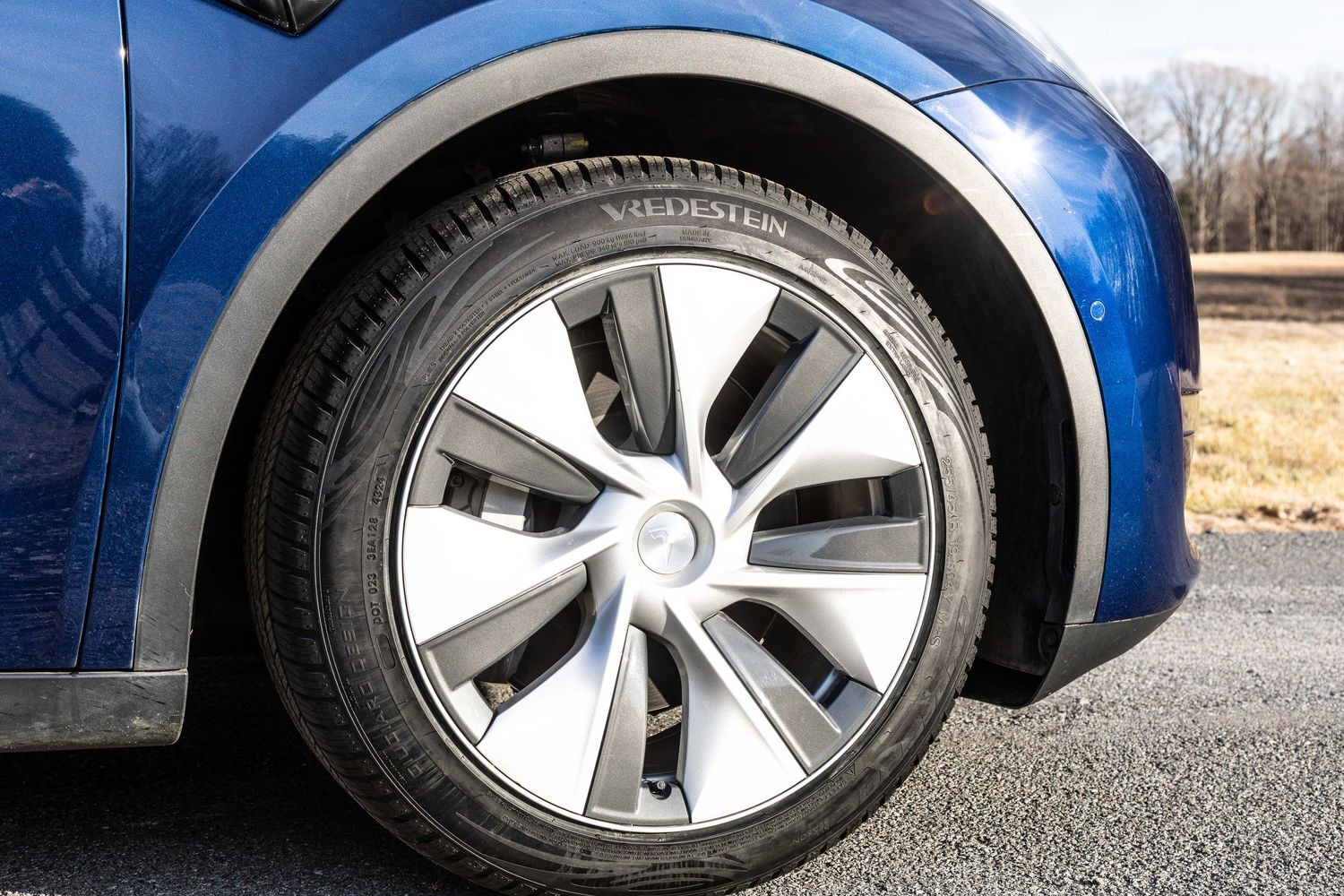
Vredestein answered quickly and enthusiastically. I was familiar with them from when I lived in the UK in the 1990s. They’re a familiar name in enthusiast circles in Europe, but they’re not yet a household name in the US. A few days later, a fresh set of Hypertrac All Season tires arrived courtesy of the marketing team at Vredestein, and then the Southeast experienced its biggest ice storm followed by a snowstorm not seen in nearly 20 years.
After what seemed like weeks of waiting, Major Tom went in for a four wheel alignment and a new set of shoes.
Unfortunately, that alignment revealed something telling: the previously repaired right-front corner (the accident site) is still slightly out of alignment, and won’t align perfectly into spec. It's not dangerous or dramatic, but it will be discussed on the next visit I make with the Tesla service department to discuss strategy.
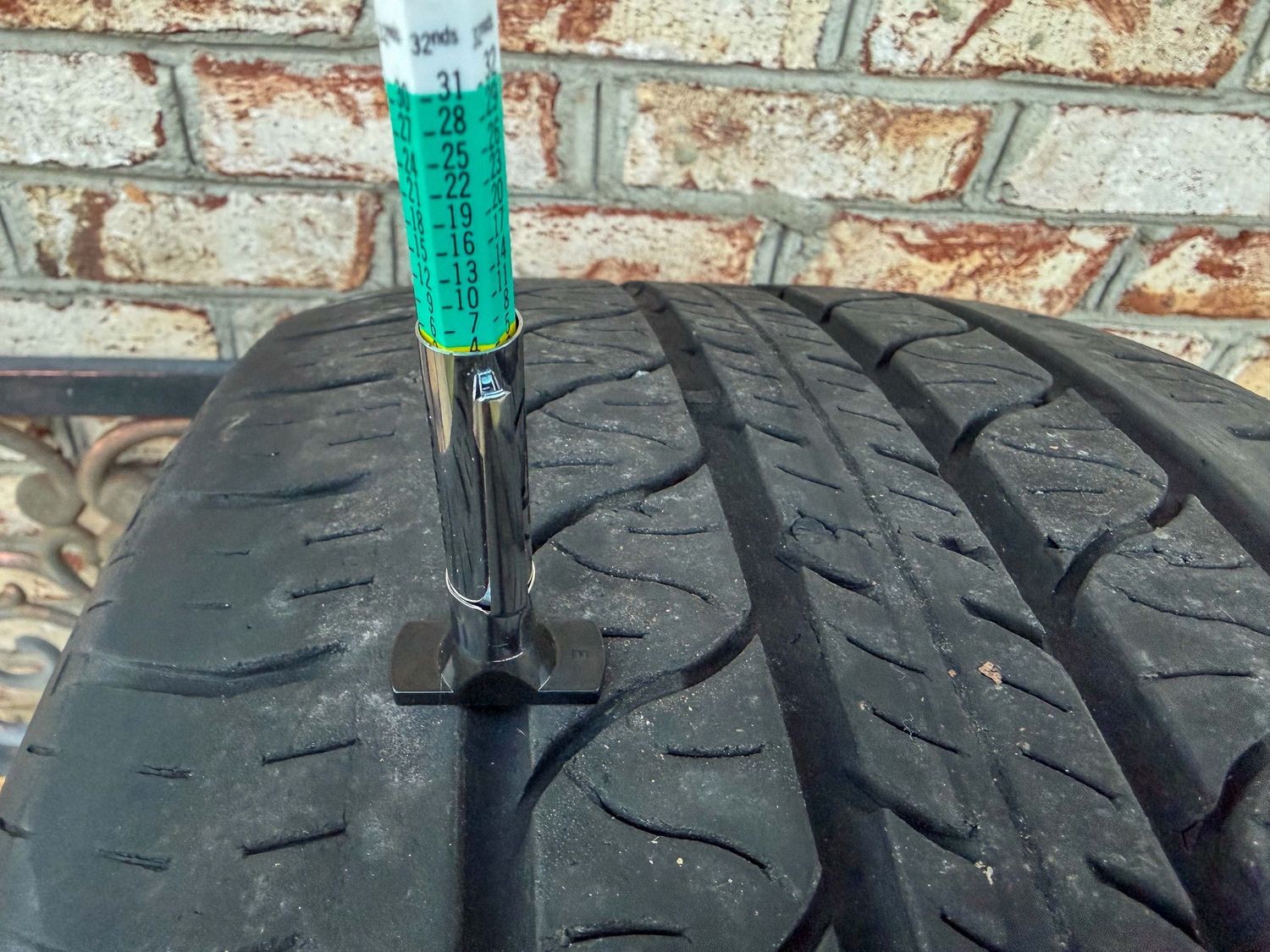
The Right Front Continental, a 2021 Veteran is showing just at the edge of needing replacement at 20,925 miles
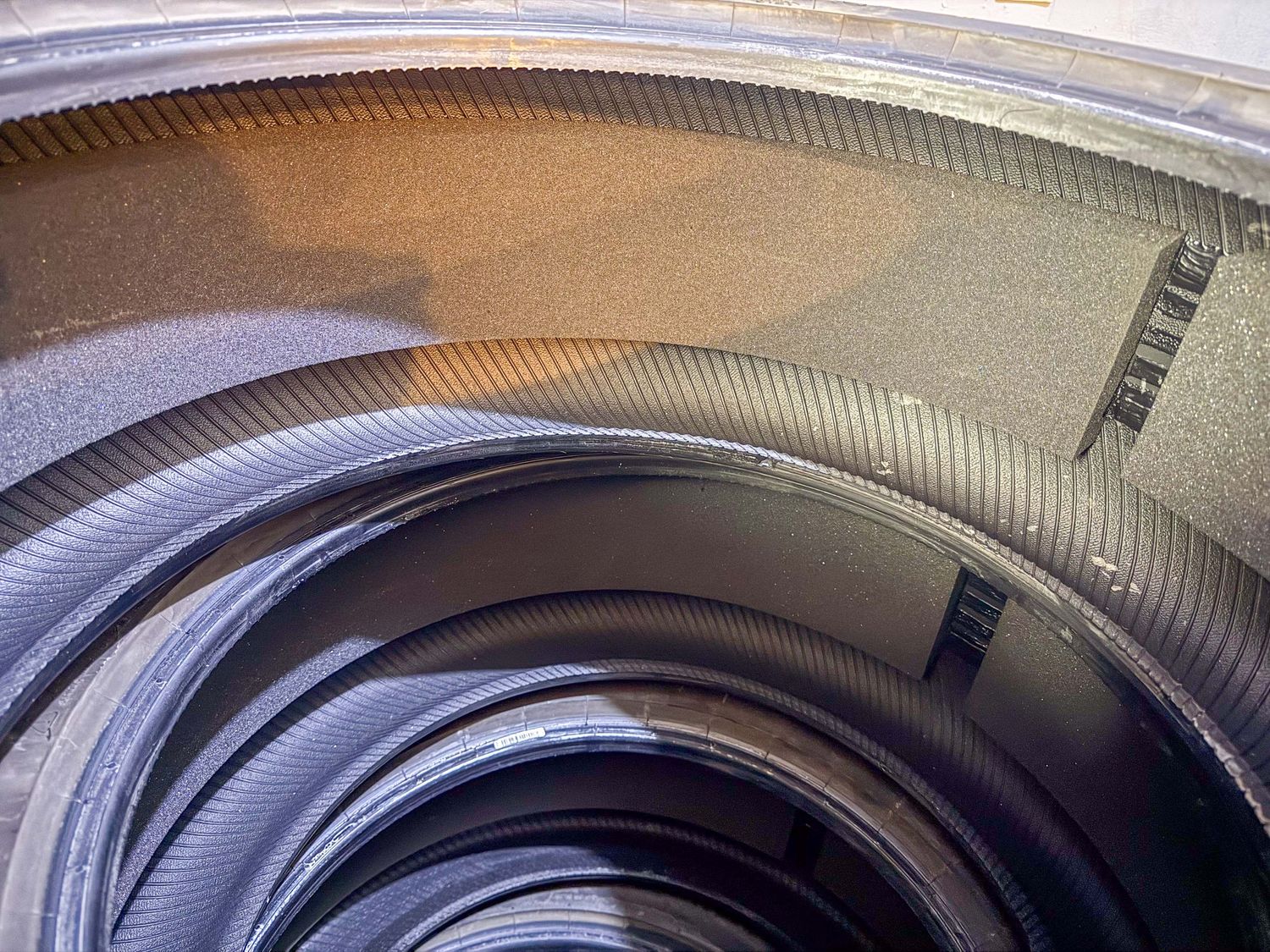
The OEM Continentals come with acoustic foam bonded to the tire casing to dampen tire noise and resonance.
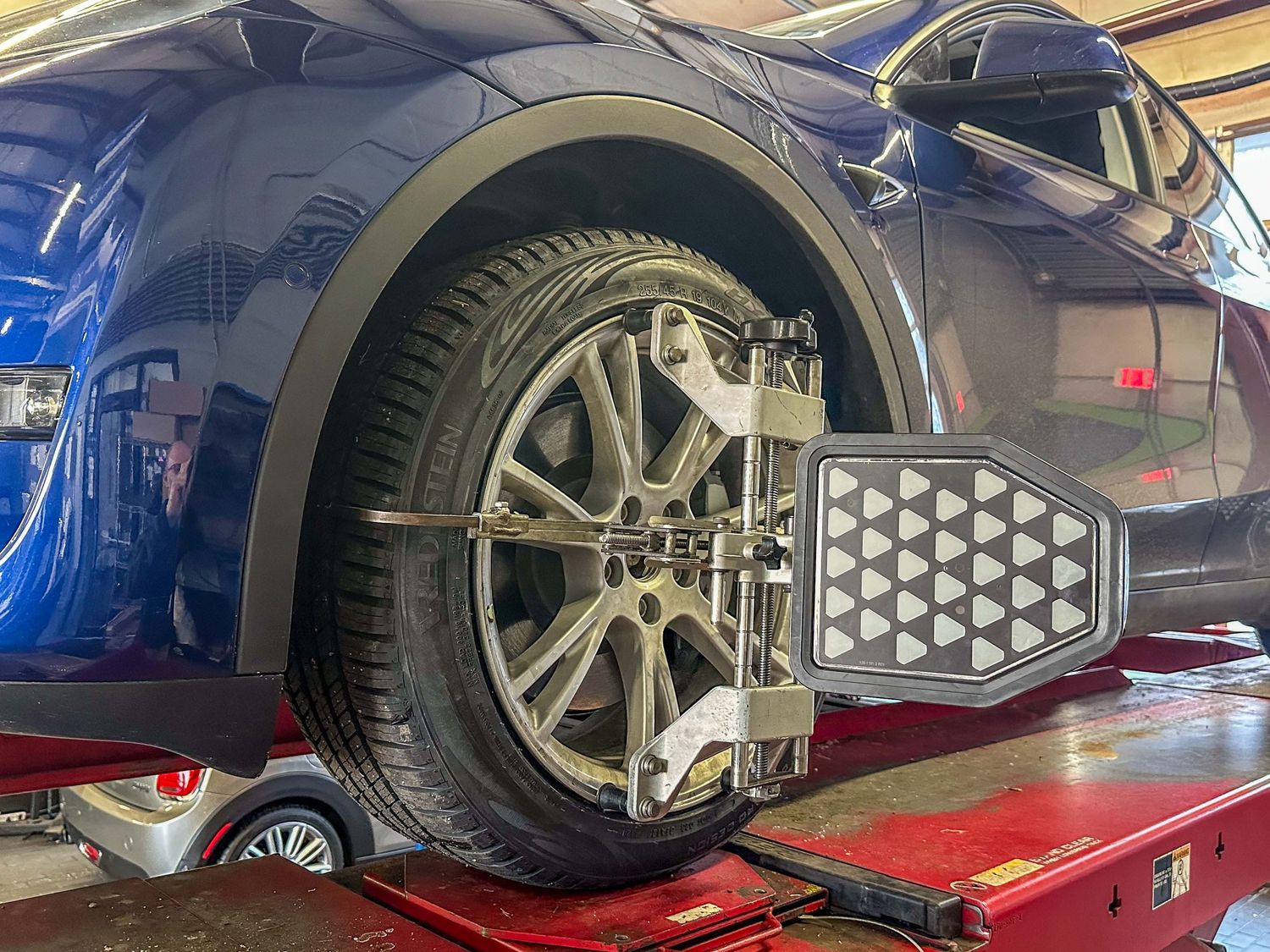
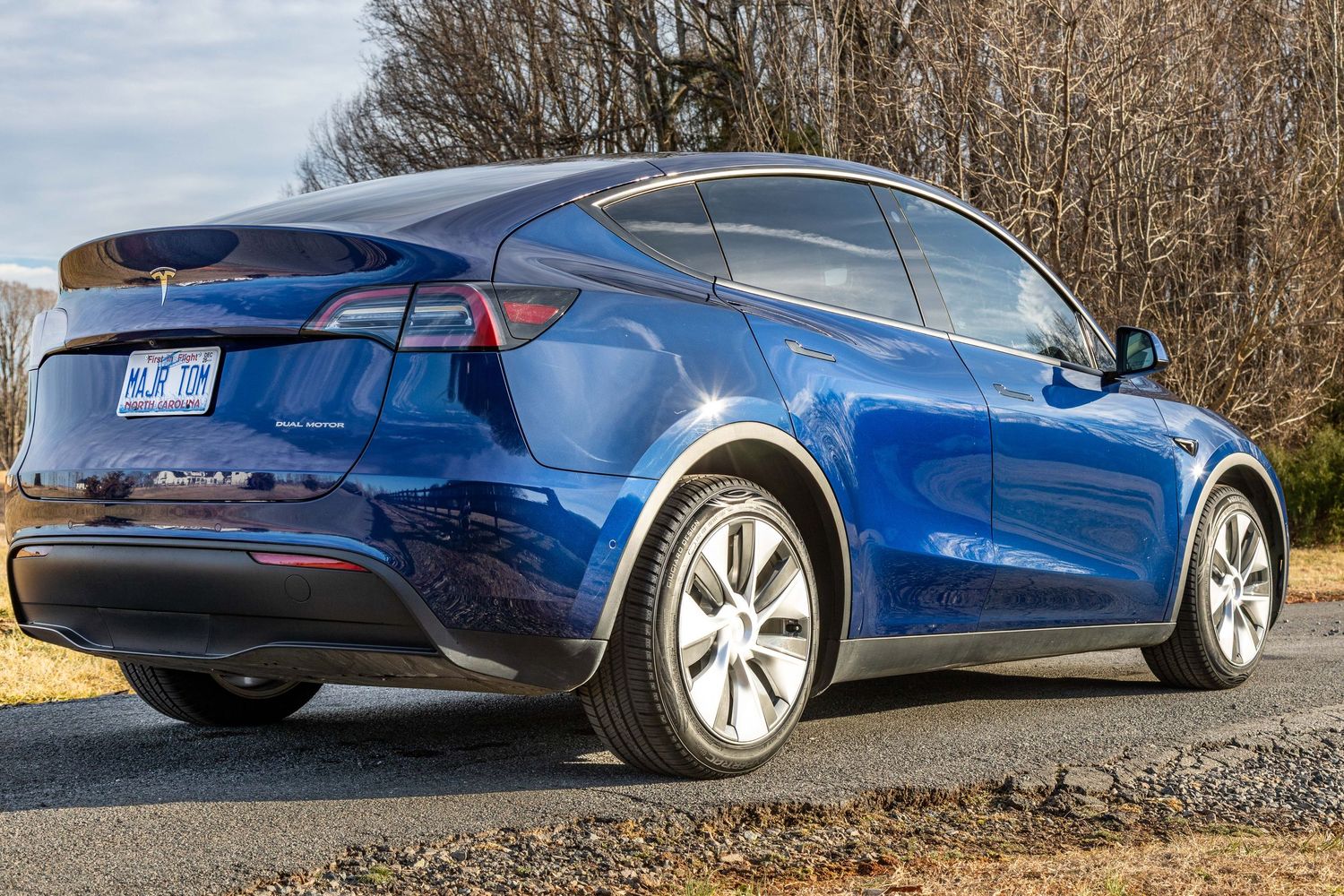
The new Vredestein Hypertracs finally mounted and getting a fresh alignment
For those following along, this is why I was so obsessive about trying to get the car's history and a copy of the inspection report before taking delivery. These things can pop up. In my defense, the maintenance history stored in the car shows that the alignment was "checked" in April of 2025, (the accident was in March). Major Tom hit a parked car in a parking lot. It’s all documented and it will be monitored.
The Hypertrac carries a 50,000-mile treadwear warranty, which more than covers the remainder of this 30,000-mile lease experiment. That warranty alone changes the psychological equation at lease turn-in. So now I have:
Fresh rubber
.
Corrected geometry — as close as the car allows.
A warranty that outlasts the lease window.
Clean baseline.
For those unfamiliar with the brand, Vredestein started building bicycle tires in 1909 in the Netherlands. Over the decades, they’ve grown and evolved into a premium brand that sits comfortably alongside Michelin, Pirelli, and Continental in the high performance space. Vredestein is also an original equipment supplier for several BMW Group vehicles, including the X1, X2, 5 Series, and select Mini models.
In the U.S., the name feels newer, largely because its serious North American push is recent. While a U.S. subsidiary existed years ago, it wasn’t until around 2020 that Vredestein launched a focused expansion into this market with products engineered specifically for North American driving conditions, including the Hypertrac line that I’ve got on the Tesla. You’ll find substantial test data on platforms like Tire Rack and Consumer Reports. These tires consistently have strong real-world results, often at a price point 15 to 25 percent lower than other brands in this segment. I will be documenting tread life, hardness, noise, and subjective "feel" over the duration of my time with Major Tom, and hopefully having fun and getting some great pictures and video.
Unexpected Design Details
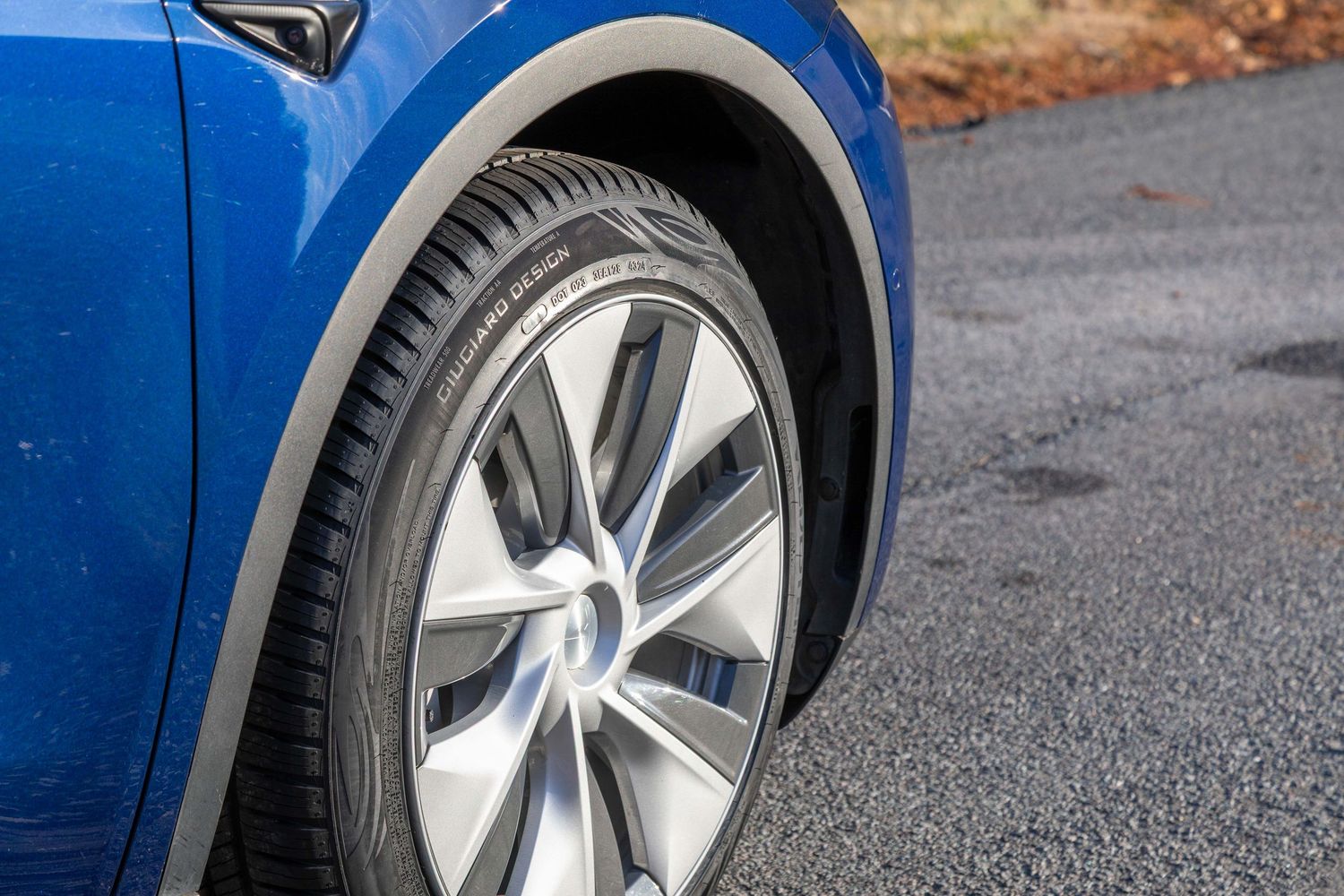
When the tires arrived, I removed the shipping labels so I could get some photos for the site and noticed some intricate "ripple effect" designs on the sidewall, kind of a subtle design detail, along with a brand mark that I didn't recognize: Giugiaro Design. I did some quick research: Giorgetto Giugiaro is one of the most influential automotive designers of the last 50 years, and he's been associated with vehicles like the BMW M1 and the original Volkswagen Golf. As a marketing guy, I definitely get the fine details, and I like the subtle design cues, essentially signing your work.
I found a previous press release that discussed the ripple-effect sidewall pattern as a visual reflection of the tire’s wet-performance characteristics. It doesn’t make the tire perform any better, but it reinforces the idea that this brand is putting a lot of thought into not only the engineering, but the design. Its an interesting Easter egg that didn't go unnoticed.
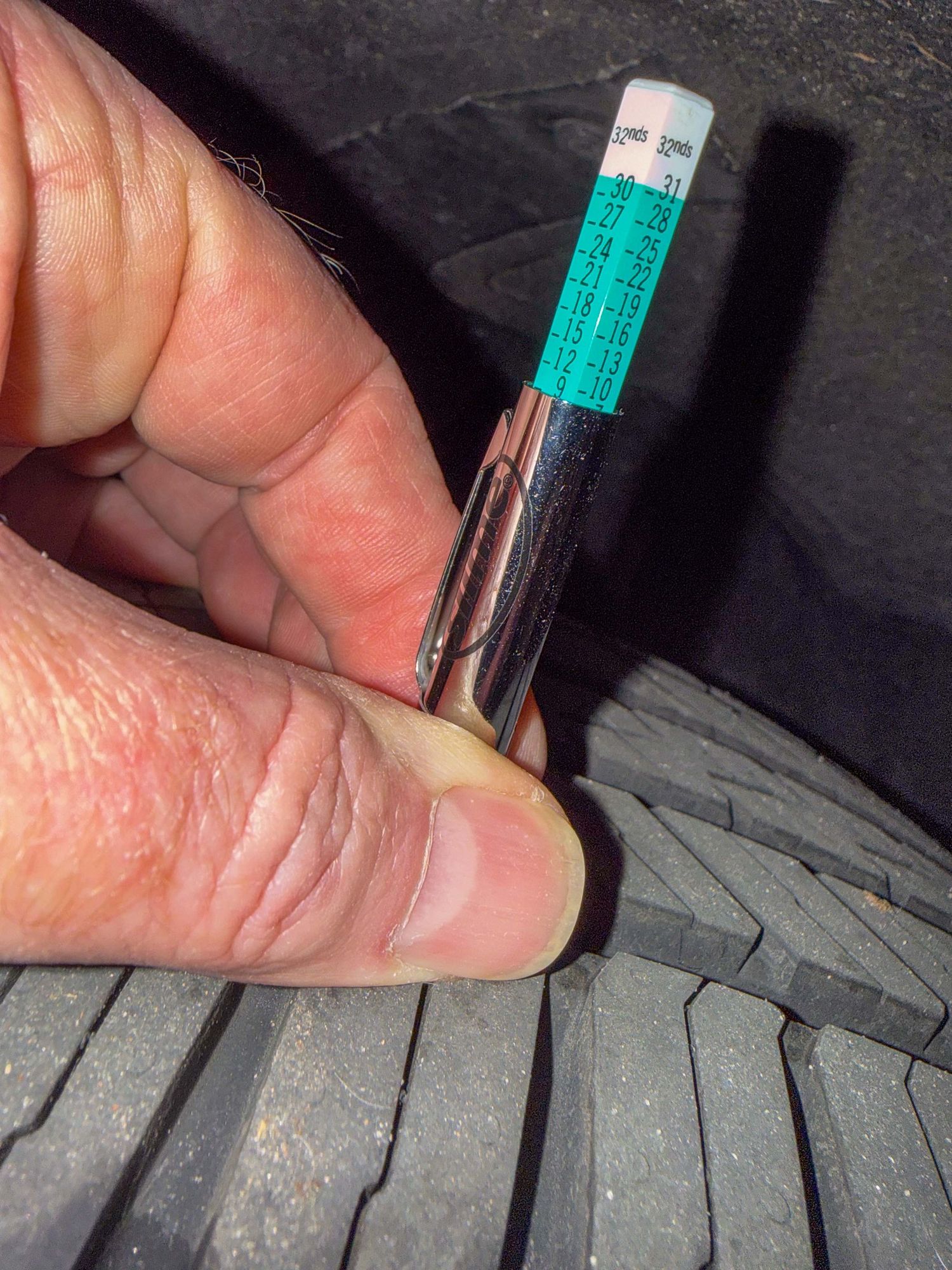
The new Hypertracs start with a healthy 9/32nds of tread and a 50,000 mile treadwear warranty
EV-Specific vs. Conventional Performance
The outgoing Continentals were manufactured specifically to be EV-tuned tires. The Hypertracs are not, and there is no acoustic foam. They are engineered as ultra-high-performance all-season tires, which matches my driving style and commute. They're designed to balance grip, wet capability, handling precision, and durability across a wide range of vehicles. Major Tom is heavy at 4550 pounds (published curb weight) and the manufacturer recommends a 6500 mile rotation schedule.
Winter Testing wasn’t part of the original plan
Then the Southeast experienced its heaviest ice and snow event in nearly two decades. Major Tom sat in the warm garage while the roads were closed and impassable, new tires stacked in the corner. Once I finally got the tires installed, I didn’t have many opportunities to baseline them. I did manage a few drives on half-snow, half-dry roads, which is normally unsettling, but the combination of fresh rubber and Tesla’s traction control kept things pointed straight.
Next Phase of the experiment
• Efficiency comparison versus worn Continentals
• Cabin noise tracking
• Wear-rate documentation
• Continued monitoring of the accident-corner alignment
I’ve effectively removed one of the biggest unknowns at lease end. With matching tires, a documented alignment, and a known starting point, the experiment finally has a clean mechanical baseline.
Now the real tracking begins.