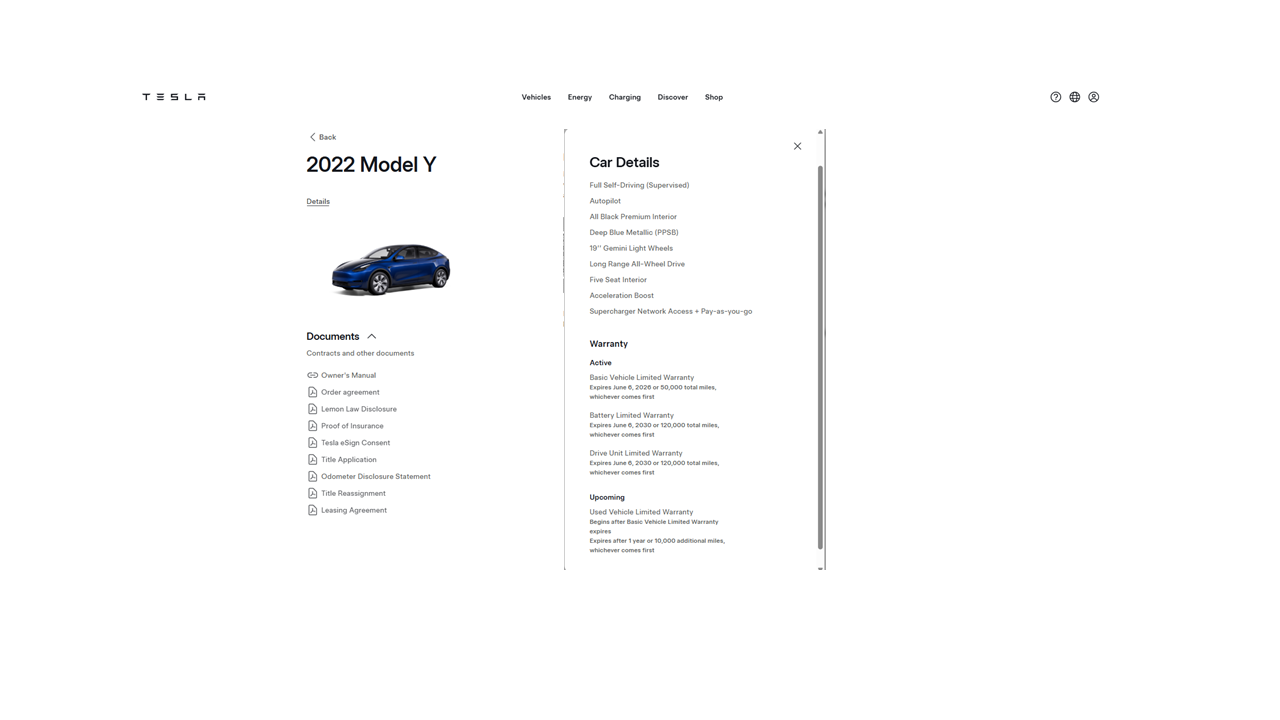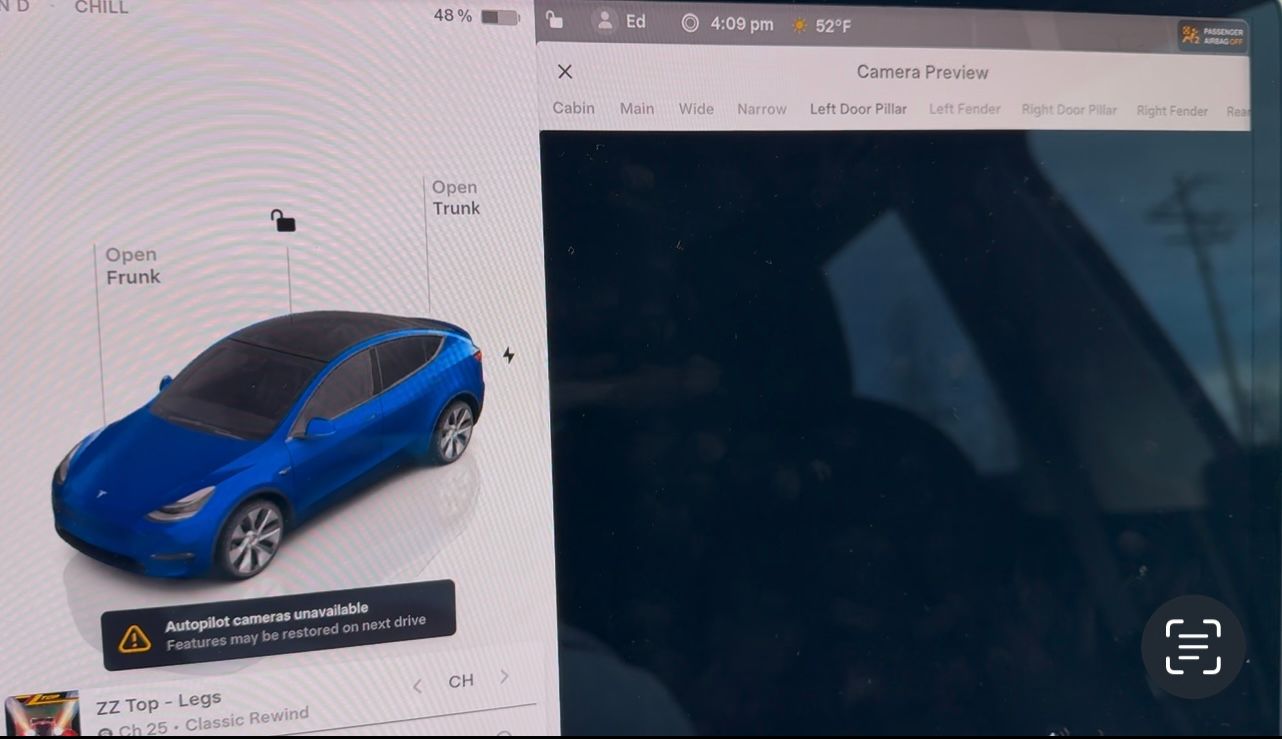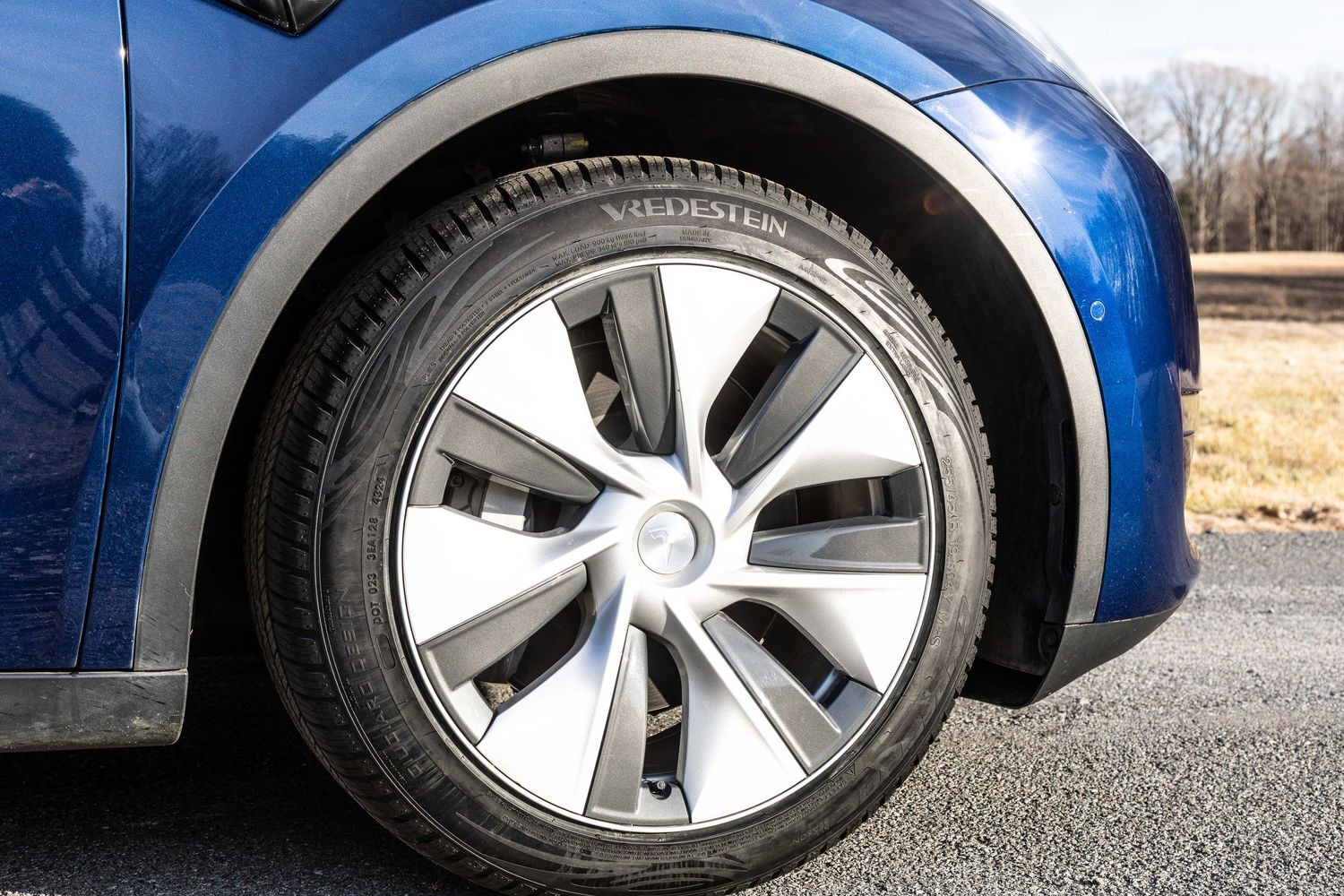
By now, the car is home. The paperwork is done. The delivery photos are filed away. The tires are… complicated.
This is where things usually get fuzzy in EV discussions, so let’s slow down and do the unglamorous part: the math.
Not influencer math. Not “Tesla says” math. Just basic inputs, outputs, and assumptions.
The Commute
My daily round trip is roughly 66 miles, five days a week. That’s about 330 miles per week, or 16,000–17,000 miles per year if I drove it every workday without thinking.
The lease allows 15,000 miles per year, so I’m already operating close to the line. That means two things:
I need to understand my real energy consumption/ savings over gas (which is why we went with a Tesla).
- I need to plan my miles carefully or will be looking at paying $..25 per mile at the end for every mile I go over.
To get the most electrons/ dollar, we have to charge strategically.
Consumption Reality
So far, real-world usage has been remarkably consistent. A typical workday uses about 30% of the battery. Weather matters. Rain matters. Headlights, wipers, and HVAC matter. But the swing hasn’t been dramatic.
That means I’m not “charging from empty.” I’m replenishing what I used that day.
This is an important mental shift for anyone coming from gas.
Home Charger Setup
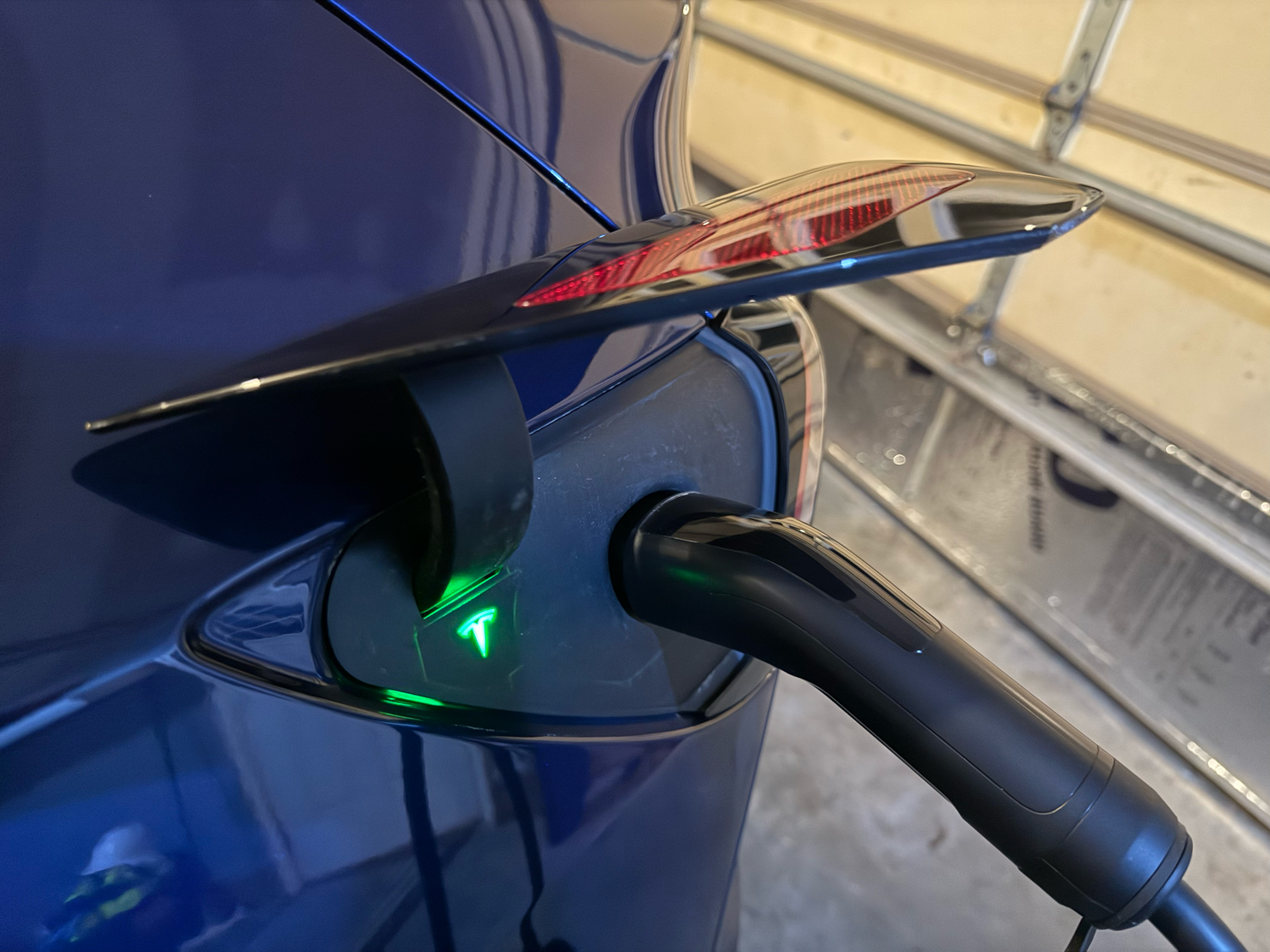
I had a certified electrician install a NEMA 14-50 outlet on a 50-amp circuit in my garage. On a friend's recommendation, I ordered an Ecogenix 40-amp Level 2 charger with a Tesla-specific plug (under $200 on Amazon). Our local utility reimburses up to $1,100 for the installation labor, which made it a no-brainer.To add a safety buffer and ease stress on the equipment, I dialed the charger down to 32 amps (vs. its full 40). That reduces continuous load on the breaker and wiring while still adding back my daily usage in about 3–4 hours.
No drama. No range anxiety. No midnight panic.
The Tesla Branded charger is $450, and has its own app and reporting, so I may review one later in the series. Its important to note that the car controls the charging behavior, not the charger. That’s an important distinction. The Tesla decides when to start, when to stop, and how much current it actually accepts. You can schedule from the car or the app.
Charging Strategy
I’m currently charging nightly, mostly because it simplifies tracking, and its off-peak rates. The battery typically lands somewhere between 45–55% at the end of the day. I charge back up to 80%, which Tesla recommends as the sweet spot for daily use.
I will do a full 100% charge now that I’m settling into the routine, and to establish some baselines.
I’m also experimenting with off-peak electricity rates, but here’s the honest part: the discounted window is narrow enough that convenience still matters. I’m watching the numbers, but I’m not rearranging my life to save pennies yet.
That analysis will come later with a detailed spreadsheet.
Electricity Costs (so far)
Without getting too deep into spreadsheets yet, the early takeaway is simple: charging at home is dramatically cheaper than fueling a comparable gas vehicle for this commute. Even without perfectly optimized off-peak charging, the math is already working in my favor. I’ll publish exact dollar figures once I have a full month of data, but nothing so far has surprised me in a bad way. Lets just say I’ve gone from $15-20 in gas per day (V8 Tahoe) to roughly $1 in electrons.
The Big Mental Shift
The biggest change isn’t the cost. It’s the behavior. You don’t “run out” of electricity the way you run out of gas. You manage it. You replenish it incrementally. You think in percentages instead of miles. That takes about a week to feel normal. After that, it’s just… routine.
Where This Goes Next:
This chapter establishes the baseline:
- Daily energy use
- Charging time
- Charging habits
- Early cost assumptions (spreadsheet coming)
The next chapter gets more granular. I’ll start tracking:
Cost per mile
Charging efficiency
Weather impacts
Tire effects on range and noise
And eventually, this all rolls back into the question that started the project:
Does a pre-owned Tesla lease actually make financial sense in the real world, or does it just look good on a website?
So far, the math is behaving.